The Journal
The Wellbeing Benefits of Abstract Painting: Colour, Form and Calm at Home
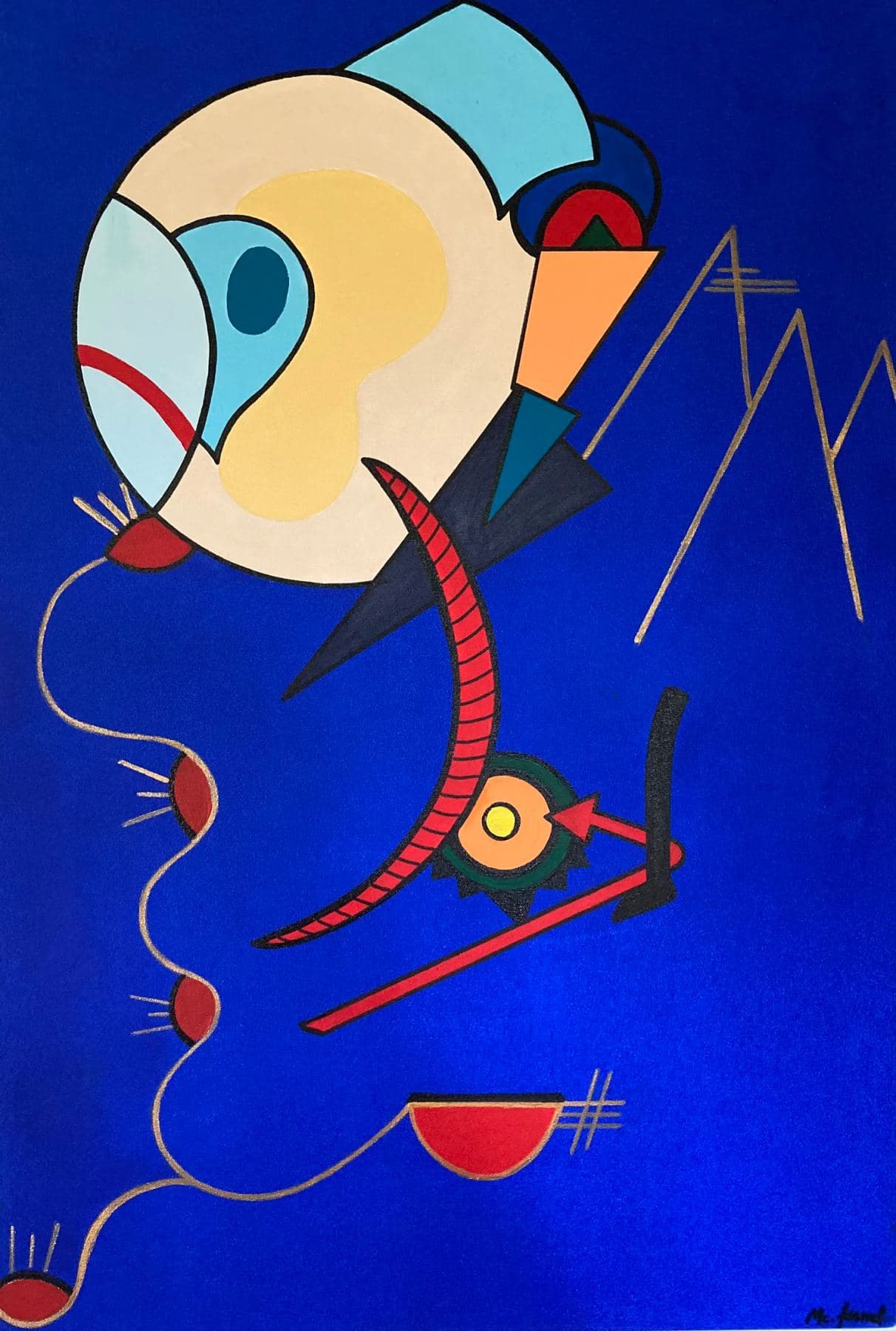
Hang an abstract painting in a living room and the whole space feels different. Colour, the absence of a subject to decode, texture: here's how abstract art shapes wellbeing at home, from an artist who has painted and exhibited since 2021.
Hang an abstract painting in a room, and it starts to feel different almost immediately. That's not just an impression — the colour, form and texture of an abstract work genuinely shape the atmosphere of an interior and the mood of the people living in it. With no subject to interpret and no story to decode, abstract painting speaks directly to the senses, which is partly why so many people now choose it not just to decorate, but to feel better at home. Here's what I've learned, as an artist who has painted and exhibited for several years, about the link between abstract art and wellbeing.
Why colour shapes our mood
Colour doesn't just dress a wall — it changes how light reads in a room, affects perceived warmth, and, through associations shared across cultures, nudges our mood. Warm tones — reds, oranges, golds — energise a space and encourage conversation, which is why they turn up so often in living rooms and dining areas. Cool tones — blues, deep greens, violets — settle the eye and suit bedrooms or quiet corners better. None of this is an absolute rule, but these are long-observed tendencies in both interior design and colour therapy — and ones a painter learns to use deliberately. I go through these associations hue by hue, and the room each one suits best, in the dedicated article on colour psychology in abstract painting.
Abstraction as a break for an overloaded mind
A figurative painting asks something of us almost without our noticing: to identify a face, a landscape, a scene, and make sense of it. Abstract painting drops that demand entirely. With nothing to decode, the eye can simply rest, follow a diagonal, drift from one field of colour to another, with no obligation to reach a conclusion. In a day filled with screens and information to process, that absence of a literal subject offers a genuine visual break — one reason so many people describe living with an abstract painting as restful, long after the initial spark that made them buy it at an exhibition.
From Kandinsky to today: art built to resonate, not just represent
None of this is new. As early as 1911, in his essay Concerning the Spiritual in Art, Wassily Kandinsky described colour as a force able to stir the viewer's inner life independently of any recognisable subject — an intuition that laid the theoretical groundwork for early abstraction. A century on, that idea still shapes how people choose art for their homes: not just an image they like, but a presence that can accompany the mood of a room, morning after morning.
Five ways an abstract painting changes the feel of a room
- —A dominant warm or cool palette shapes a room's perceived warmth and energy far more durably than a cushion or a curtain
- —The absence of a literal subject lowers the mental load of looking — the eye rests on shape and colour instead of searching for meaning
- —The relief of a knife-textured canvas catches light differently through the day, animating a room that would otherwise stay static
- —A large abstract format becomes a visual anchor that organises a space and reduces the sense of clutter in a busy room
- —A piece chosen for personal resonance, rather than a passing trend, keeps building an emotional connection over time
Painting to be felt before it's understood
This calming quality is no accident in my own work. My palette — shaped by my training between Buenos Aires and São Paulo — is deliberately warm and vibrant, meant to give off positive energy rather than tension. I think of Passage Flou, a canvas dominated by deep blues and crossed by a vivid, knife-worked red stripe, where the blue mass settles the eye while the red adds a spark of energy — or Reflets de Joie, sunnier, built to energise a living space. These are never neutral decorating choices — every canvas carries an emotional intention before it becomes something to hang on a wall.
I never paint a colour to fill a canvas — I paint it for what it makes the person looking at it feel.
You can browse all of my colourful, monochrome and figurative works in the Full Collection, and see the exhibitions across France, Spain and Andorra where several of them have been shown on the News page — feel free to get in touch if one speaks to you in particular.
Tags
Frequently Asked Questions
Why does abstract art feel calming?+
Because it frees the eye from the effort of recognising a subject — with no face or scene to identify, the eye simply settles on colour, shape and texture, which lowers the mental load of looking and builds a lasting sense of calm.
What colours make an abstract painting calming for a bedroom?+
Deep blues, greens and neutral tones lifted by a touch of colour remain the safest choices for a restful space — they settle the eye without erasing the canvas's energy entirely. A piece like Passage Flou, dominated by deep blues, is a good example of this register.
Can abstract painting genuinely reduce everyday stress?+
It's obviously no substitute for therapeutic support, but living day to day with a work that imposes no story or judgement to interpret contributes, for many collectors, to a lasting sense of calm and familiarity — a cumulative effect rather than an instant one.
Where should you hang an abstract painting to support wellbeing at home?+
In rooms meant for rest — a bedroom, a bathroom, a reading corner — lean towards a softer palette and more intimate formats; in living and social spaces, a livelier canvas in a larger format adds energy instead, without ever feeling overwhelming.
Discover the works
Browse the full collection of original abstract paintings by M. C. Lamamie de Clairac.
View the Collection →