The Journal
Contemporary Art in Barcelona: Miró, Gaudí and Geometric Abstraction
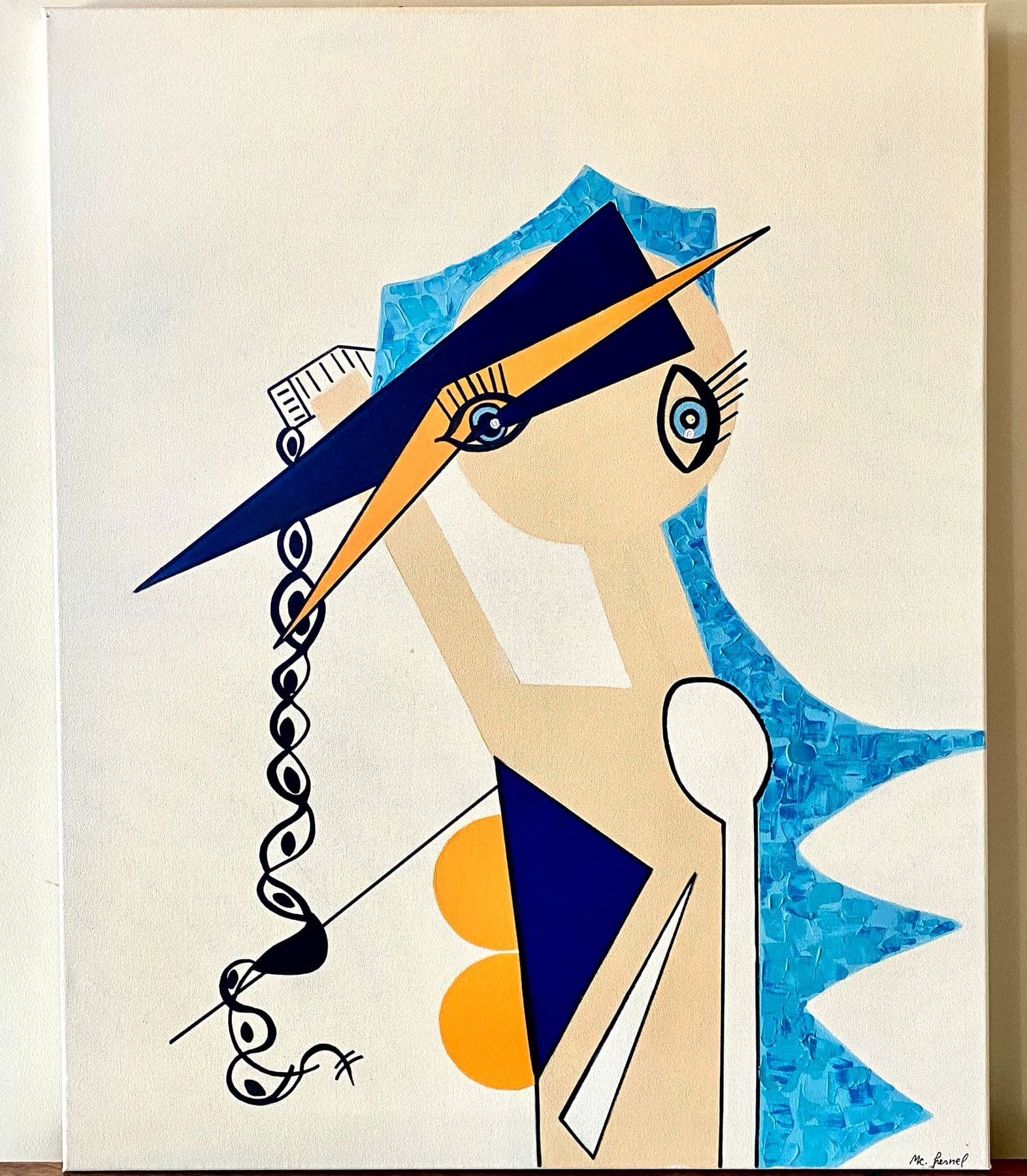
Gaudí's towers draw the crowds, but Barcelona also raised Joan Miró and hosted the formative years of Joaquín Torres-García — the same lineage that gave rise to the Latin American geometric abstraction I trained in. Another way of looking at the city.
People come to Barcelona for the spires of the Sagrada Família or the winding benches of Park Güell, and often leave having seen little beyond Gaudí. That means missing another story — less spectacular, but just as decisive for anyone interested in abstract art. Barcelona raised Joan Miró, hosted the formative years of Joaquín Torres-García, and had the latter working alongside Gaudí himself — a thread that, decades and an ocean later, helped give rise to the Latin American geometric abstraction I trained in between Buenos Aires and São Paulo. Here's why the city deserves to be seen through that lens too.
A forgotten link: Torres-García, between Gaudí and Uruguay
Few visitors know that the Uruguayan painter Joaquín Torres-García grew up and trained in Barcelona, where his family settled while he was still a child, at the very end of the 19th century. As a young painter, he moved within the Catalan Noucentisme movement and worked alongside Antoni Gaudí on decorative and stained-glass commissions tied to his major projects, including the Sagrada Família. It was only after returning to Uruguay in the 1930s that Torres-García formulated Constructive Universalism (universalismo constructivo): a geometric abstraction built on the grid, the sign and the pre-Columbian symbol rather than on European vocabulary alone. That thinking fed directly into the Concrete and Madí movements in Argentina and Brazil I discuss in an earlier article on Latin American geometric abstraction — the very tradition my own training belongs to.
Miró and Tàpies: two sons of Barcelona who set colour and matter free
Born in Barcelona in 1893, Joan Miró studied drawing there before moving to Paris in the 1920s, where he built a personal vocabulary of flat primary-colour shapes, signs and biomorphic forms, poised between Surrealism and pure abstraction. Three decades later, another Barcelona native, Antoni Tàpies, invented a radically different abstraction built from raw matter — sand, crushed marble, torn canvas — in the vein of European Art Informel. Neither artist ever turned away from the city: each founded his own foundation there, both now open to the public.
Where to see contemporary art in Barcelona today
Beyond its modernist architecture, Barcelona holds a handful of essential venues for anyone wanting to trace this story into the present:
- —The Fundació Joan Miró, on Montjuïc hill, in a building designed by the artist's friend, architect Josep Lluís Sert, which holds the bulk of his painted, sculpted and woven work
- —MACBA (Museu d'Art Contemporani de Barcelona), opened in 1995 in the Raval district, dedicated to Spanish and international contemporary creation since the 1950s
- —The Museu Picasso, housed across several Gothic palaces on Carrer Montcada, which traces the painter's formative Barcelona years rather than his better-known Cubist period
- —The Fundació Antoni Tàpies, set in the former Montaner i Simon publishing house, one of the city's earliest modernist buildings
- —The private galleries of the Raval and El Born districts, home to a younger, more experimental scene in constant dialogue with this triple legacy
What Gaudí did for stone and stained glass, Miró and Torres-García did for colour and the grid — freeing form so it alone could carry the full meaning of the work.
Barcelona and my own Latin American geometric heritage
I have never exhibited in Barcelona to date: my Spanish journey has so far been built in Madrid, where I showed a selection of my canvases in December 2023 at the 'Couleurs et Formes' exhibition. But the city remains, for me, an almost genealogical landmark: it's partly thanks to Torres-García's time in Barcelona, and later in Uruguay, that geometric abstraction took on, in Latin America, the colour and freedom of sign I recognise in my own training between Buenos Aires and São Paulo, and that I continue today in acrylic and palette knife. You can discover my colourful geometric works in the Full Collection, and follow my upcoming exhibitions across France, Spain and Andorra on the News page.
Barcelona versus Madrid: two Spanish scenes, two claims to legitimacy
Madrid, where I've exhibited, is built around major state museums and an international fair, ARCOmadrid, that punctuates its calendar every year. Barcelona works differently: its contemporary scene reads through the foundations of artists born in the city, Miró and Tàpies chief among them, and through an older history — that of Gaudí, Catalan Modernisme, and Torres-García's quiet passage through the city that ties it to Latin American abstraction. The two capitals complement each other more than they compete, for anyone wanting to understand 20th-century Spanish art as a whole.
Tags
Frequently Asked Questions
Where can you see contemporary art in Barcelona?+
The Fundació Joan Miró on Montjuïc and MACBA in the Raval are its two main hubs, complemented by the Museu Picasso and the Fundació Antoni Tàpies. The private galleries of the Raval and El Born host a younger, more experimental scene.
What is the connection between Barcelona and geometric abstraction?+
Uruguayan painter Joaquín Torres-García grew up and trained in Barcelona, where he worked with Gaudí, before returning to Uruguay and formulating Constructive Universalism there — a body of thought that deeply influenced the Concrete and Madí movements in Latin America.
Were Miró and Tàpies abstract painters?+
Miró worked at the border of Surrealism and abstraction, using flat primary-colour shapes and biomorphic forms; Tàpies developed a matter-based abstraction built from raw materials, close to European Art Informel. Both were born in Barcelona.
Has M. C. Lamamie de Clairac exhibited in Barcelona?+
Not yet: my Spanish journey has so far been built in Madrid, where I exhibited in December 2023. Barcelona nonetheless remains an important reference for understanding the roots of my own geometric abstraction.
Do you need to visit Barcelona to understand Latin American geometric abstraction?+
It isn't essential, but it helps: it was partly in this city that Torres-García trained before developing, once back in Uruguay, the ideas that later fed into geometric abstraction across Latin America.
Discover the works
Browse the full collection of original abstract paintings by M. C. Lamamie de Clairac.
View the Collection →