The Journal
Soto and Cruz-Diez: The Venezuelan Masters of Kinetic Art
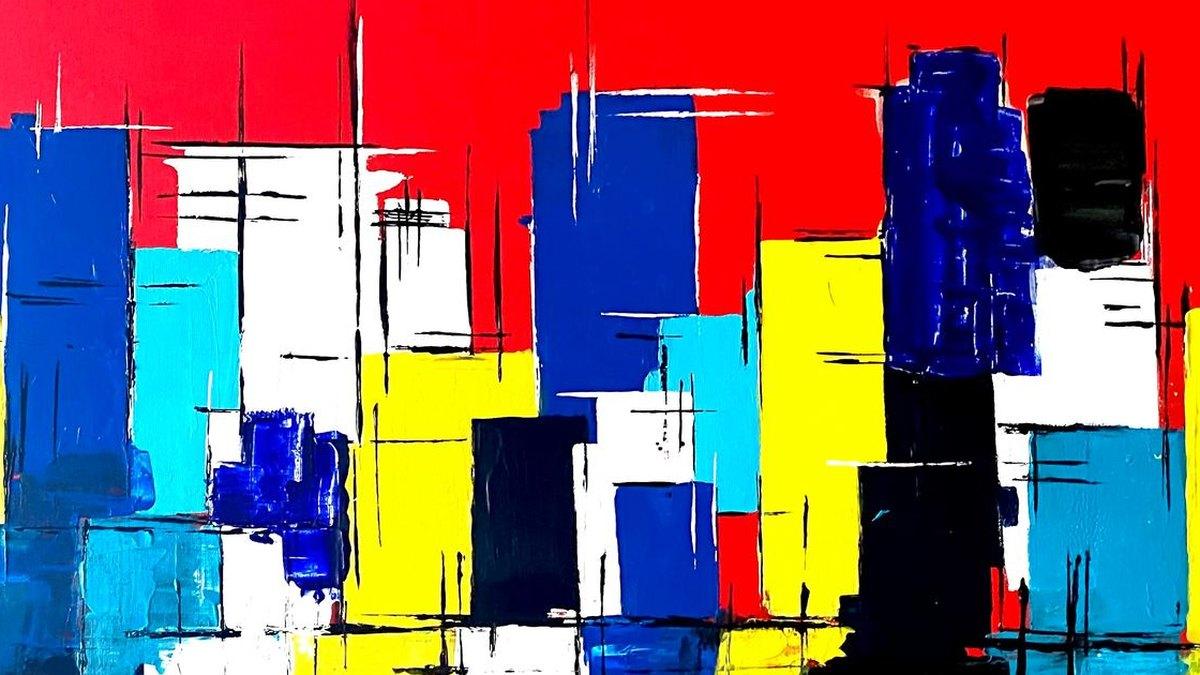
Both born in Venezuela in 1923, both settled in Paris: Jesús Rafael Soto and Carlos Cruz-Diez made vibration and moving colour the heart of kinetic art. Their lives, their key series and where to see their work.
Two men born in the same year, 1923, in the same country, who each left for Paris to invent a kind of painting that moves without moving: the story of Jesús Rafael Soto and Carlos Cruz-Diez reads almost like a fable. Yet it explains why, whenever kinetic art comes up in Spain or Latin America, the first names mentioned are Venezuelan. One made line vibrate; the other set colour free. Here is a side-by-side portrait of two artists who taught the eye to become part of the work.
Jesús Rafael Soto, from Ciudad Bolívar to Paris
Jesús Rafael Soto was born in 1923 in Ciudad Bolívar, on the banks of the Orinoco. As a teenager he painted cinema posters for a living, then won a scholarship to study at the School of Plastic Arts in Caracas. In 1950 he moved to Paris, drawn by the legacy of Mondrian and European geometric abstraction. Five years later he took part in 'Le Mouvement' at the Galerie Denise René, alongside Victor Vasarely, Alexander Calder and Jean Tinguely — the exhibition often regarded as the birth of kinetic art. He lived and worked in Paris until his death in 2005.
Vibrations, writings and Penetrables: Soto’s major series
Soto's principle comes down to one simple idea: layer two planes of lines so that where they meet, a vibration appears the moment the eye or the body moves. In the late 1950s his 'Vibrations' placed thin metal rods, sometimes twisted like handwriting, in front of a ground of black-and-white stripes: the rod seems to dissolve and shimmer. From 1967 he took the idea to architectural scale with the 'Penetrables', forests of hanging nylon threads that visitors walk through. The work no longer sits in front of the viewer but all around them. In 1973 his home town opened the Museo de Arte Moderno Jesús Soto, which holds a large part of his work alongside artists he admired.
Carlos Cruz-Diez: colour as an event
Born in Caracas in 1923, Carlos Cruz-Diez also trained at the city's School of Plastic Arts and worked as a graphic designer and art director before devoting his life to a single question: can colour exist without a support, as an event that happens in the eye? In 1959 he made his first Physichromies, surfaces built from thin vertical slats whose colour shifts with the viewing angle and the light. Settled in Paris from 1960, he spent nearly sixty years there developing a genuine research system, until his death in 2019.
- —Physichromie: coloured slats set perpendicular to the ground, sending back different colours depending on where the viewer stands
- —Chromatic Induction: patterns that make the eye see a colour that is not actually painted on the surface
- —Chromointerférence: moving or projected patterns that interfere with a fixed one to create shifting colours
- —Transchromie: transparent colour screens that overlap as you move past them
- —Chromosaturation: rooms flooded with red, green and blue light in which the visitor is fully immersed in colour
His most widely seen work is probably a floor: the large striped pavement of Maiquetía International Airport, near Caracas, created in the 1970s and now one of Venezuela's best-known visual symbols.
What unites them, and what sets them apart
Soto and Cruz-Diez share the essentials: training in Caracas, a life in Paris, and the conviction that a work is completed in the eye of someone who moves. They also belong to a wider Venezuelan scene that includes Alejandro Otero and his Coloritmos, and Gego and her wire networks. But their means differ sharply: Soto works with line, pattern and the dematerialised object, often in black and white, while Cruz-Diez makes pure colour the very subject of each piece. To see how this movement differs from the Op Art of Vasarely or Bridget Riley, read our article on what kinetic art is.
A still canvas can still set the eye moving: that is the lesson I take from Soto and Cruz-Diez, even if I look for it with a palette knife rather than with slats.
Their legacy in my own painting
I'm not a kinetic artist, and my canvases contain neither rods nor slats. But having trained between Buenos Aires and São Paulo, I belong to the same family as Soto and Cruz-Diez: Latin American geometric abstraction, where colour is never mere filling. In Ville Cubique, vertical bands of blue, yellow and white stand out against a frank red, crossed by thin horizontal lines drawn with the knife: with no mechanism at all, the contrast of complementary colours already makes the surface vibrate as you come closer. That is the part of their legacy that stays with me, along with colour theory. You can see this canvas and the others in the Collection, and follow my upcoming exhibitions across France, Spain and Andorra on the News page.
Tags
Frequently Asked Questions
Who was Jesús Rafael Soto?+
A Venezuelan artist born in 1923 in Ciudad Bolívar who died in Paris in 2005, and a major figure of kinetic art. Based in Paris from 1950, he is known for his Vibrations, which layer lines to create optical movement, and for his Penetrables, installations of hanging threads that visitors walk through.
What is a Cruz-Diez Physichromie?+
It is a surface made of thin vertical slats painted in different colours on each face. Depending on where the viewer stands and on the light, the colours seen change: colour becomes an event that happens in the eye rather than a fixed hue laid on the canvas.
What is the difference between Soto and Cruz-Diez?+
Both were Venezuelan, born in 1923 and based in Paris, but Soto worked mainly with line, pattern and vibration, often in black and white, while Cruz-Diez made pure colour and the way it changes with the viewing angle the centre of his work.
Where can you see works by Soto and Cruz-Diez?+
In Venezuela, at the Museo de Arte Moderno Jesús Soto in Ciudad Bolívar and on Cruz-Diez's floor at Maiquetía airport. Their work is also held in major modern art collections in Europe and the Americas; check what is currently on display, as it is not always shown.
Discover the works
Browse the full collection of original abstract paintings by M. C. Lamamie de Clairac.
View the Collection →