The Journal
What Happens at an Art Exhibition Opening (Vernissage): A First-Timer's Guide
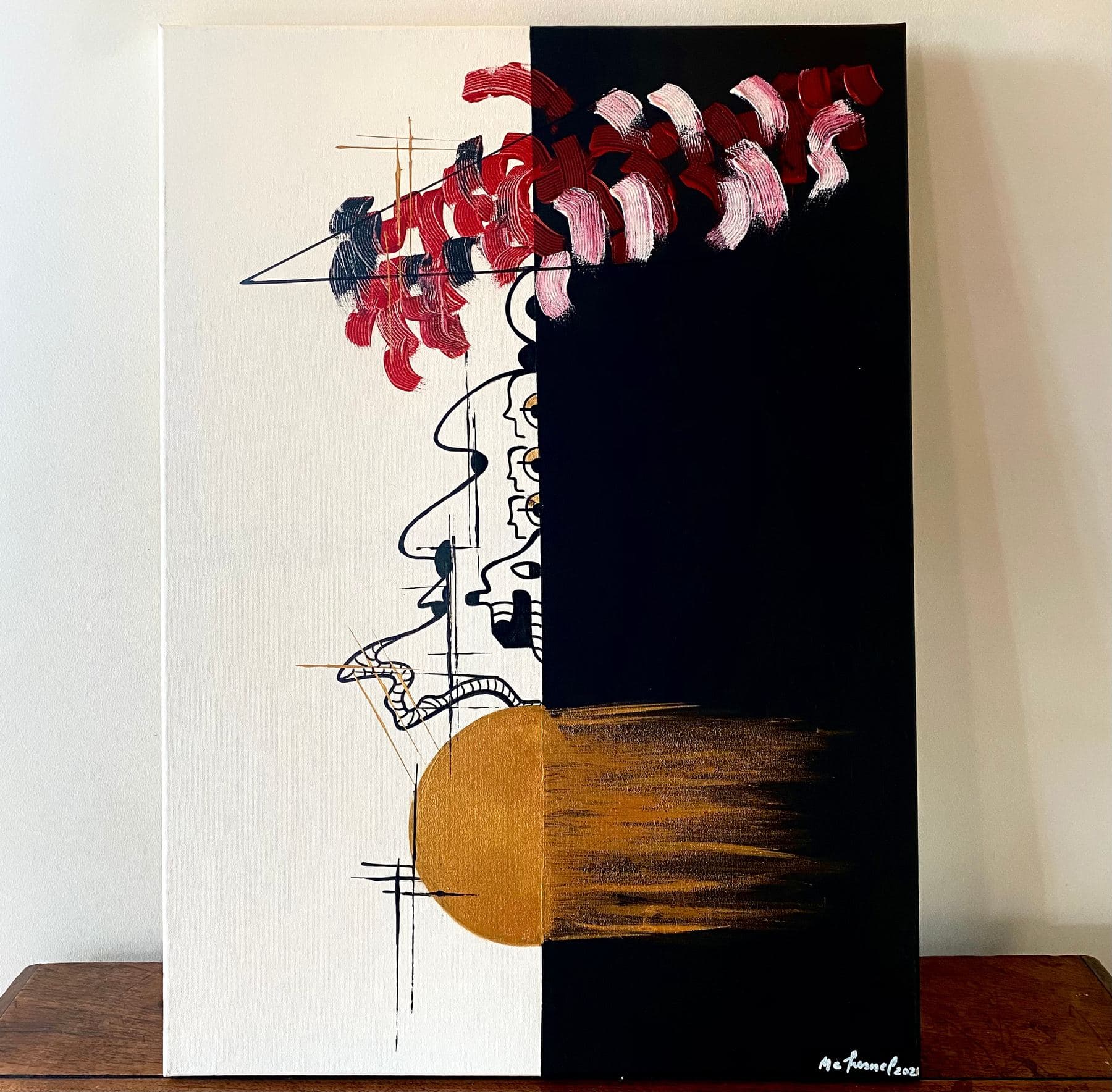
Smart-casual or black tie? Are you expected to buy something on the night? A painter who has exhibited across France, Spain and Andorra since 2021 demystifies the opening night — the social, informal evening that comes before the quieter days of an exhibition.
An invitation that looks a little smarter than usual arrives, a date gets circled on the calendar, and the same question comes up every time: what actually happens on the night? An opening — often called a vernissage, from the French word for varnishing — is usually the public's very first encounter with an exhibition, and yet it remains a mystery to anyone who has never walked through the door. Between a glass of wine and a room that slowly fills up, here is what really goes on, and how to make the most of it, whether you know abstract art inside out or you're stepping into a gallery for the first time.
What exactly is a vernissage?
The French term comes from a very literal gesture: at the 19th-century Paris Salon, painters were given a day to apply one last coat of varnish to their canvases before the exhibition opened to the public. Friends, critics and collectors used that working day to see the paintings first — the tradition survived, the varnish disappeared. Today, a vernissage refers to the opening evening of an exhibition, usually the night before or the very first day, distinct from the quieter days that follow when visitors browse the show at their own pace. It's as much a social occasion as an artistic one: people come as much to meet the artist and talk to other visitors as to look at the paintings.
How the evening unfolds, start to finish
The format changes little from one venue to another, whether it's a town hall, a château or a museum. Doors usually open in the late afternoon or early evening, somewhere between 6 and 7pm, for a couple of hours. Early arrivals get a quieter first look at the hang before the room fills up; a short welcome, sometimes given by the artist or by the host organisation, usually marks the centre of the evening. The rest of the time is split between looking at the work, talking, and — almost always — a drink in hand: wine, juice, sometimes a local specialty depending on the region.
- —Arrival and an open browse of the hang
- —A short welcome from the artist, the venue or the organisers
- —A relaxed stretch around a drink, ideal for conversation
- —Informal chats with the artist about technique and intention
- —A staggered departure, with no strict closing time
How to dress and behave
- —There's no strict dress code: smart-casual works for the vast majority of openings, outside of the most formal institutional events
- —Look first, comment after — take a moment to actually see a painting before forming an opinion, out loud or otherwise
- —Ask the artist directly if she's there: most genuinely enjoy explaining a technique or an intention behind a piece
- —Avoid touching the canvases, especially textured, palette-knife work that can still be delicate
- —There's no obligation to buy anything: an opening can be fully enjoyed with a glass in hand and nothing under your arm on the way out
What the evening looks like from the artist's side
For an artist, every opening feels a little different from the last. Since 2021, I've had the chance to hang my canvases in places as varied as a former grain hall in Lavaur, a medieval château in Saint-Félix-Lauragais, a motorcycle museum in Canillo, Andorra, and an exhibition in Madrid — and every time, the opening remains the moment when a painting, until then alone in the studio, meets an outside eye for the first time. It's also a chance to explain why a particular canvas was worked with a palette knife rather than a brush, or where a certain colour comes from, rooted in my years between Buenos Aires and São Paulo. You can see my full history of past and upcoming exhibitions on the News page, and browse the works that were shown there in the Full Collection.
An opening isn't there to sell a painting — it's there to let the work live once more in front of me, before it goes off to live its own life somewhere else.
Enjoying an opening with no art background at all
You don't need an art history degree to enjoy a vernissage — if anything, the opposite is true: a fresh eye asks the questions a regular visitor has stopped asking. Allowing yourself a quiet moment in front of a canvas, watching how the venue's light changes your reading of it from one hour to the next, or simply asking the artist what led to a particular composition are all perfectly valid ways into the work with no prior knowledge required. Thanks to its relaxed, social nature, the opening remains one of the most approachable ways to discover contemporary art — far more so than a silent museum room.
Tags
Frequently Asked Questions
Do you need an invitation to attend an art exhibition opening?+
Most openings for community, municipal or independent artists' exhibitions are open to everyone, invitation or not — usually all it takes is showing up at the stated time. Some private gallery or more institutional openings may ask for RSVP; if in doubt, a quick message to the organiser or the artist clears it up.
Is there an entrance fee for an art opening?+
No, in the vast majority of cases: entry is free, drinks included. It's one of the real advantages of an opening over other cultural events — it lets you discover an exhibition and meet an artist with no financial barrier at all.
Are you expected to buy a painting on opening night?+
Not at all. An opening is, first and foremost, a moment of discovery and conversation; many visitors come back to see a painting again days later, once the decision feels less rushed. An artist who's present is usually still available afterwards to answer questions and arrange a purchase outside of the evening itself.
How long should you stay at an art opening?+
There's no set length: some visitors stay twenty minutes, others stay the whole evening. The best time to arrive is within the first hour, while the atmosphere is still calm enough for a proper look at the work, before the room fills up.
What's the difference between a vernissage and an exhibition?+
The vernissage is the opening evening of an exhibition — a one-off, social occasion. The exhibition itself is the full period during which the works stay hung and visible to the public, sometimes for several weeks, and which can be visited at any time outside the opening, in a quieter setting better suited to close looking.
Discover the works
Browse the full collection of original abstract paintings by M. C. Lamamie de Clairac.
View the Collection →