The Journal
Preparing an Exhibition Hang: How I Choose, Arrange and Light My Paintings
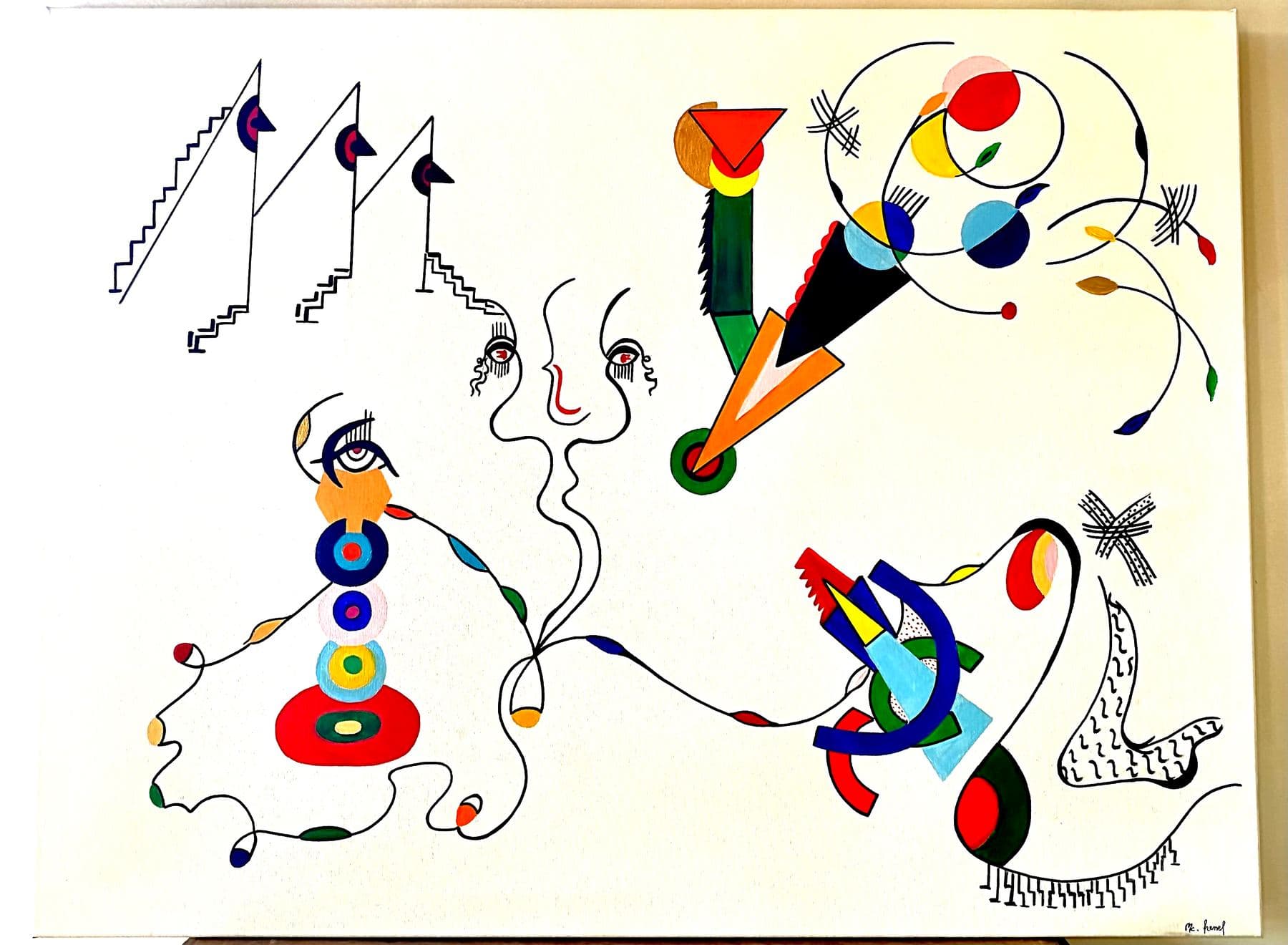
Before an opening, you have to decide which paintings travel, in what order they speak to each other, and how to make them work in a space you never fully control. Between grain halls, a château and a motorcycle museum, the artist explains how she actually prepares an exhibition hang — choosing the works, arranging the space and working with the light — drawing on her nine exhibitions across France, Spain and Andorra.
An exhibition doesn't start the moment the first nail goes into the wall. Long before the opening, you have to decide which paintings travel, in what order they speak to each other, and how they'll live in a space you never fully control — a grain hall has neither the white walls nor the even lighting of a museum. In this new Journal piece, I walk through how I actually prepare an exhibition hang, from choosing the works to lighting the very last painting, drawing on my own exhibitions across France, Spain and Andorra.
Choosing the works: the first decision, before anything goes on the wall
Not every painting from my studio travels to every show. The choice starts with a practical question: how many metres of wall the venue offers, and which works are still available — some, like Jumeaux or Colère, have already found their collector and never return to the walls. Then comes a more delicate question: which paintings speak well together. I try to avoid lining up pieces that look too alike, or pieces so opposed they tire the eye — a hang that works alternates sizes, lets a dense piece breathe next to a lighter composition, and tells something across the whole visit rather than offering a plain string of paintings.
From a grain hall to a motorcycle museum: adapting to a space you didn't choose
Most contemporary art shows today are designed around what's known as the 'white cube' — the white-walled, neutrally lit room with architecture erased, theorised in the 1970s by critic Brian O'Doherty as the standard setting for modern art. That's almost never my case. Across nine exhibitions since 2021, I've hung my paintings in the Halle aux Grains in Lavaur, with its 19th-century stone and timber frame, in the vaulted rooms of the Château de Saint-Félix-Lauragais — a fortress first recorded in writing in 1035 — and in the Museu de la Moto in Canillo, Andorra, among vintage motorcycles rather than blank walls. Each of these spaces sets its own terms: a beam that limits how high you can hang, daylight that shifts through the day, walls that are never quite flat. Working with those constraints rather than fighting them is as much part of the job as the painting itself.
Five things that make a hang work
- —Spacing — giving each painting room to breathe, especially around a dense or large-format piece like Jumeaux (160 × 90 cm)
- —Height — centring the hang roughly at eye level, around 150 cm from the floor, but always adjusted to the room's actual ceiling and wall
- —Colour rhythm — grouping or spacing paintings by their dominant colours so one doesn't drown out its neighbour
- —The route — thinking about the order the eye will travel through the room, not just each painting in isolation
- —The room's quirks — a window, a doorway, a low beam can't be avoided, so they become anchor points for the hang instead
Light changes everything: composing with what you can't control
The palette-knife relief — the layered texture I build up on canvas, covered in more depth in the article on palette-knife technique — behaves very differently depending on the light. Under a well-aimed museum spotlight, every ridge of paint casts a crisp shadow; under the shifting daylight of a grain hall, the same painting can look almost alive from one hour to the next. Before hanging anything, I always spend time watching how the light in a venue moves through the day, so the most textured pieces end up where that material can actually show, rather than tucked into a corner against the light.
A painting never quite stops at its edge — it carries on into the light and space around it, and that space is what I'm preparing, almost as much as the canvas itself.
From my studio in the Tarn to the walls of nine exhibitions
Since my first public exhibition in Puylaurens in 2021, after ten years away from painting, I've hung my work in places as different as a former hôtel-Dieu in Toulouse, an exhibition hall in Madrid, and a motorcycle museum in the heart of the Andorran Pyrenees. That range of venues has taught me to treat the hang itself as part of the creative process, not just a logistical afterthought. You can browse every available painting in the Full Collection, or find the dates and locations of my upcoming exhibitions in France, Spain and Andorra on the News page.
Tags
Frequently Asked Questions
How does an artist choose which works to exhibit?+
The choice starts with practical constraints — how much wall space is available and which pieces are still for sale, since some works have already gone to a collector — then a subtler balance of size, colour and texture, so the paintings speak to each other without repeating or competing.
What is the 'white cube' in contemporary art?+
It's the name given to the standardised exhibition room — white walls, neutral light, architecture erased — that became the norm for modern art galleries and museums from the 1970s onward. My own exhibitions usually move away from that model, since they take place in grain halls, châteaux and former hôtels-Dieu rather than standardised white rooms.
How high should a painting be hung in an exhibition?+
The most common convention centres a painting around 150 cm from the floor, at eye level, though that rule always bends to the room's real architecture — a low ceiling, an uneven wall, or light coming from one side only. Hanging at home follows slightly different cues, which I cover in the article on pairing an abstract painting with interior design.
Why exhibit in a grain hall or a château instead of a gallery?+
Because the regional art scene in Occitanie, which I cover in the article on the contemporary abstract art scene across Occitanie, Madrid and Andorra, is built precisely around these heritage venues rather than city galleries — a more direct way of meeting an audience, often with the artist there in person.
Discover the works
Browse the full collection of original abstract paintings by M. C. Lamamie de Clairac.
View the Collection →