The Journal
How to Care for and Preserve an Abstract Painting: Light, Humidity and Framing
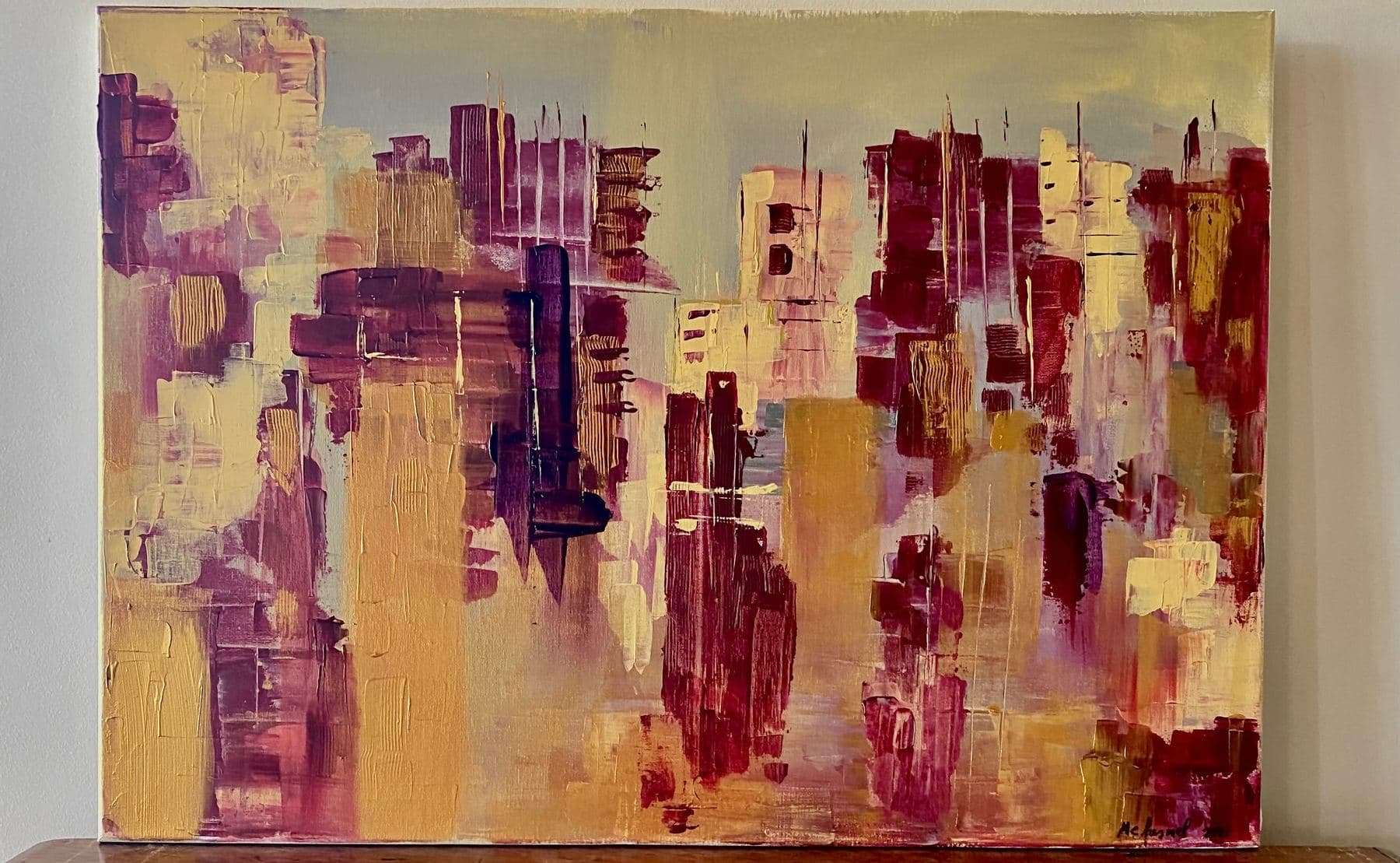
"So how do I actually take care of it?" A painting has just arrived home: here, from the perspective of an artist who has painted, transported and exhibited her own canvases since 2021, is how to keep it looking the same in ten years.
"So how do I actually take care of it?" It's a question that comes up almost every time, once a painting is finally hanging on the wall — after choosing the size, the colour and the spot, there's a quiet gap nobody quite fills: how do you actually live with an abstract painting day to day? The reassuring answer: an acrylic canvas isn't some fragile object to handle with kid gloves, but it does deserve a few simple habits to keep its colour and texture intact for decades. As an artist who has painted, transported and exhibited her own canvases since 2021, here is what actually matters when it comes to caring for, preserving and framing an abstract painting.
Acrylic on canvas: easier to care for than people assume
Unlike a watercolour on paper or a pastel work, an acrylic painting on canvas is a sturdy surface, made to live in a home rather than behind museum glass. The acrylic film dries into a flexible, stable plastic layer that holds up well against everyday wear — a late-afternoon shaft of sunlight, a draught, the dust that settles on a frame over time. Caring for an abstract painting doesn't call for a complicated routine or specialist products: it comes down to a few good habits, starting with what to avoid.
Light, humidity, heat: the three factors that wear down a canvas over time
None of these three factors damages a painting overnight — which is exactly what makes them easy to overlook. Prolonged direct sunlight, especially behind a large south-facing window, gradually dulls even the brightest pigments over the years. A room that's too humid — a bathroom, a cellar, an uninsulated exterior wall — can eventually cause the canvas to warp and, more rarely, encourage mould on the wooden stretcher bars. And sitting too close to a direct heat source — a radiator, a fireplace, a spotlight mounted too near the piece — makes the canvas expand and contract, which over time can weaken the paint layer. The simple rule: choose a bright wall that isn't hit by direct sun, at a reasonable distance from any heat source.
Five ways to clean an acrylic painting without damaging it
- —Dust it once or twice a month with a soft, dry cloth or a soft-bristle duster, following the direction of the texture rather than working against it
- —Never use water, solvents or household cleaning products directly on the paint, even on a visible mark
- —For a stubborn mark, dab very lightly with a barely damp cloth, then dry immediately without rubbing
- —Avoid touching the painted surface with bare hands, especially on palette-knife relief, where skin oils dull the material over time
- —Dust the back of the canvas and the stretcher bars once or twice a year too, so dust doesn't attract moisture
Should you frame an abstract painting?
It's a question that comes up at almost every exhibition: does an acrylic painting on canvas need a frame? In most cases, no — if anything, the opposite is true. A canvas stretched on its bars, shown without glass, is now the most common way to present contemporary abstract work: the edges of the canvas, often painted or neatly finished, become part of the piece itself, and the material — especially where it's built up with a palette knife — stays visible without the filter of glass. A floater frame, which leaves a small gap between the canvas and its edge, can add a more formal finish without flattening the relief. Glass, on the other hand, is rarely recommended for a textured acrylic painting: it flattens the material, creates reflections that hide the paintwork, and doesn't offer the same protective value it would on a work on paper.
A painting isn't meant to live behind glass, sealed away from everything: it should breathe with daylight, like the rest of the house.
How I prepare my canvases to survive exhibitions — and the years after
Since my first exhibition in Puylaurens in 2021, my canvases have travelled to more than nine exhibitions across France, Spain and Andorra — a pace that taught me to treat conservation as second nature rather than an extra chore. I work exclusively in acrylic, a medium that doesn't yellow over the decades the way some oil binders can, which makes long-term care much simpler. For transport, I keep my canvases flat rather than rolling them, especially the palette-knife pieces, whose relief wouldn't survive being curved. Every painting leaves the studio with a certificate of authenticity noting its technique — acrylic alone, or acrylic and palette knife — so you know exactly how to care for it once it's home. You can browse all of my canvases, organised by colourful, monochrome or figurative mood, in the Full Collection, and see several of them in person at my upcoming exhibitions, listed on the News page. If you have a question about caring for a specific piece, feel free to get in touch directly.
Tags
Frequently Asked Questions
How do you clean an acrylic painting without damaging it?+
A soft, dry cloth is enough in the vast majority of cases — dust it gently, following the direction of the texture. Avoid water, solvents or household cleaning products applied directly to the paint, as they can dull or weaken the acrylic layer, especially on thicker, palette-knife areas.
Where should you hang an abstract painting to keep it in good condition?+
Choose a bright wall that's shielded from direct sunlight, away from a radiator, fireplace or other heat source, and avoid very humid rooms like an unventilated bathroom. These simple precautions are enough to protect both colour and material for decades.
Should an abstract painting be placed under glass?+
Generally not, especially if the canvas is built up with a palette knife: glass flattens the relief and creates reflections that hide the material. Most of my works are presented on their stretcher bars, without glass, sometimes in a floater frame for a more formal finish.
Does acrylic paint yellow over time, like oil paint?+
No — the acrylic film stays stable over time, unlike some oil binders, which can yellow slightly over the decades. It's one of the reasons I work exclusively in acrylic.
How do you transport or move an abstract painting without damaging it?+
Always handle the canvas by its stretcher bars or edges, never by the painted surface, and transport it flat rather than rolled, especially if it's textured with a palette knife. Soft, breathable packaging, with no direct contact between two canvases, is enough to protect it over short distances.
Discover the works
Browse the full collection of original abstract paintings by M. C. Lamamie de Clairac.
View the Collection →