The Journal
How to Frame a Canvas: Floater Frame or Traditional Frame?
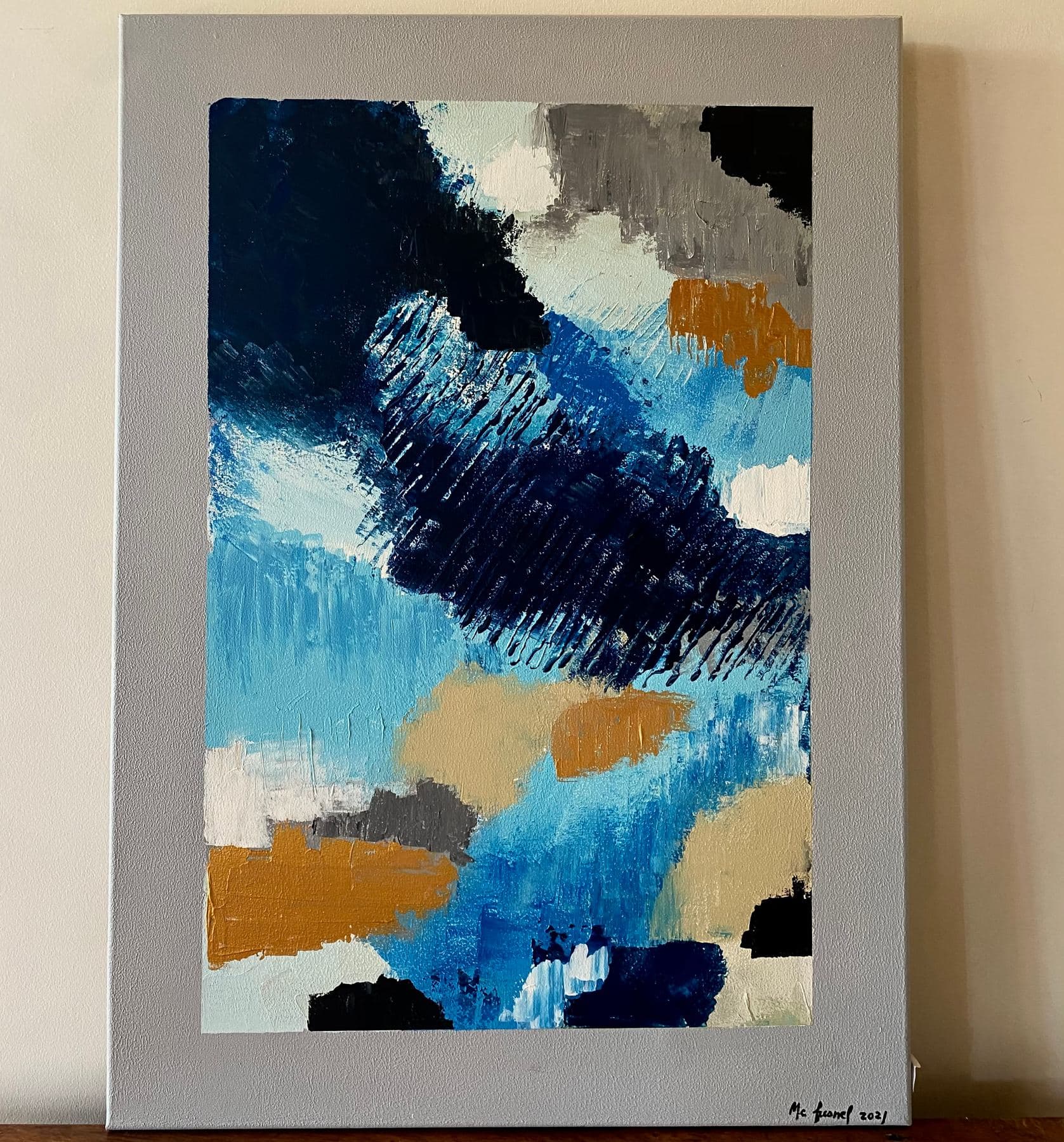
A stretched canvas needs a different frame from a photograph. Start with its depth, edges and painted surface to choose a finish that supports an original rather than competing with it.
To frame a stretched canvas, begin with the painting itself: its actual width and height, stretcher depth, surface texture and finished edges. A floater frame leaves a visible gap around the canvas, while a traditional frame usually overlaps a small part of its face. Either can work. An open frame often suits textured acrylic painting because the relief remains unobstructed, and a canvas with neatly finished sides may also look complete without any frame.
Floater frame versus traditional frame
A floater frame surrounds the stretcher without overlapping the front of the canvas. A narrow shadow gap separates the painting from the profile, giving the work a floating appearance. In a traditional frame, the canvas generally sits behind a lip called the rabbet or rebate. Check what that lip would conceal before ordering: a motif that reaches the edge, or a signature in a corner, can become partly hidden. The right frame is a response to the work, rather than an interchangeable accessory for its nominal size.
A shadow gap is different from a pale border painted on the canvas itself. In the cover photograph, the light area surrounding the composition belongs to the canvas; it is not an installed floater frame. Adding an outer frame would create another boundary beyond that painted margin. A slender profile might work quietly, while a broad one could become visually heavy. Looking at a straight-on photograph with sample profiles beside it helps you assess the full arrangement before committing to a made-to-measure frame.
Measure the support, not just the image
Measure the width, height and depth of the stretcher, checking more than one point if the support is slightly irregular. Allow for staples and existing hardware on the back. Ask the frame maker what the listed size represents: the canvas it accepts, the inner opening or the complete outside dimensions. Those conventions vary between suppliers. Do not automatically add extra room for the shadow gap; some makers already include that allowance when you provide the canvas dimensions. A quick confirmation prevents a beautifully made frame from arriving in the wrong size.
- —Width and height of the complete stretched canvas, including its edges
- —Stretcher depth and clearance for the mounting hardware
- —Finished shadow-gap width and whether it is included in the order size
- —Signature, edge details and painted sides that should stay visible
- —Combined canvas-and-frame weight and the wall construction
Does acrylic painting need glass?
Acrylic paintings on canvas are commonly displayed without glazing; the usual floater frame is an open construction. This keeps a reflective sheet from interrupting the view of the surface. It is not a rule for every artwork. Paper, pastel, fragile surfaces and some mixed media may require different protection. When glazing is appropriate, it should not touch the painted surface. For a damaged or delicate original, consult a qualified framer or paintings conservator before choosing a mounting system. The medium, condition and support matter more than a blanket rule about glass.
Choose the finish in the room where the painting will live
Black can pick up dark passages in a painting and make its outline more definite. Natural timber can provide a softer transition to a pale wall. White sometimes recedes, but it also affects the way nearby whites and colours look. Place actual samples beside the canvas, under the room’s lighting, and step back to your normal viewing distance. Start with the relationship between frame and painting; then consider the furniture. A finish need not match a cushion perfectly to feel coherent with the room, and a fashionable profile is not automatically the right one for the work.
A frame can create a pause between painting and wall without becoming the loudest voice in the room.
Mount the canvas without disturbing the paint
Use a frame designed for the support and its depth, and follow the maker’s mounting instructions. The fittings should work on the stretcher rather than pass through the painted face. Avoid screws that could emerge through the canvas, pressure that distorts the wood, or improvised adhesives on an original. A large, valuable or delicate work is a good reason to have a professional inspect the whole arrangement. Once assembled, check its stability and use wall fixings suitable for both the total weight and the wall material. Existing lightweight picture hooks may no longer be sufficient.
Making the choice for a painting in my Collection
Équilibre is a 120 × 100 cm acrylic-and-palette-knife painting in my Collection; Reflets de Joie is 60 × 50 cm. The same broad frame would occupy a very different proportion around each work. On the smaller piece it might become a major visual element, while a larger canvas changes that balance. Surface relief is another consideration: the frame should let you attend to the paint without obscuring interesting edges. Check the signature and sides before deciding how much overlap, if any, the work can accommodate.
Choose the painting and its place in your home first. Browse the Collection to compare actual formats, and contact me with the artwork’s title and a photograph of the wall if you would like to discuss its presentation. The Journal’s sofa-sizing and painting-care guides cover the surrounding decisions. Framing is one way to support a work you want to live with; it does not need to be the same solution for every canvas.
Tags
Frequently Asked Questions
What is the difference between a floater frame and a regular frame?+
A floater frame leaves a visible gap around the canvas and does not cover its face. A traditional frame generally overlaps a small part of the painting’s edges through its inner lip.
How do you measure a canvas for a floater frame?+
Measure the stretcher’s width, height and depth. Confirm whether the supplier lists canvas size, inner opening or outer frame dimensions, and whether the shadow gap is already included.
Can you frame an acrylic painting without glass?+
Yes. Acrylic painting on canvas is commonly shown without glazing, and a standard floater frame is open. Paper and fragile or mixed-media surfaces may require a different approach.
Does an abstract painting need a frame?+
No. A stretched canvas with finished sides and suitable hanging hardware can be shown unframed. Consider its condition, construction and the effect you want in the room.
What frame suits a textured palette-knife painting?+
An open frame that leaves the relief and important edges visible is often a good starting point. Check support depth and mounting hardware; consult a professional for fragile or damaged work.
Discover the works
Browse the full collection of original abstract paintings by M. C. Lamamie de Clairac.
View the Collection →