The Journal
Should You Varnish an Abstract Acrylic Painting?
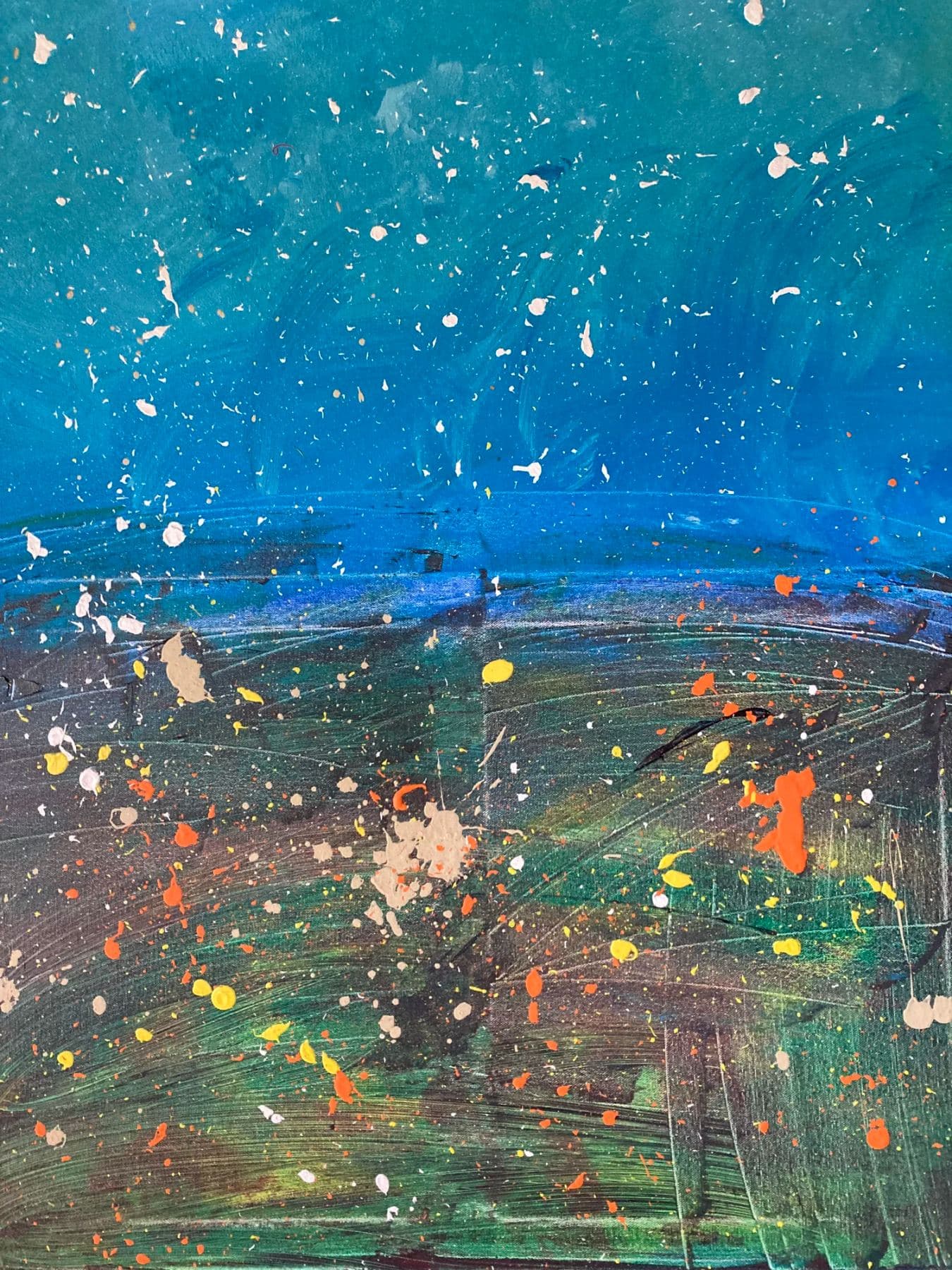
Should you varnish an abstract acrylic painting, and with what type of varnish? Between protecting colour, an aesthetic choice, and precautions specific to palette-knife relief, the artist shares her studio method.
Should you varnish an acrylic painting? It's a question I hear often at exhibitions, usually from visitors thinking about hanging a piece at home who wonder whether the very particular surface of palette-knife work can take this final finishing step. Contrary to popular belief, varnishing is neither automatic nor a minor detail: it changes how the colour reads, how well the canvas holds up over time, and it calls for a different technique depending on whether the surface is smooth or heavily textured. Here's how I approach the question in my studio, between an aesthetic choice and real protection for the work.
Varnish: a finishing step that's often misunderstood
A picture varnish is a thin protective layer applied over a finished canvas, usually several weeks after the last brushstrokes. It isn't a decorative product: its main job is to protect the painted surface from dust, humidity and UV light, which can dull colours over the years. The word vernissage, which today refers to an exhibition's opening evening, actually comes from this very gesture: in the 19th century, painters applied their final coat of varnish just before the public discovered their canvases. The tradition of the vernissage as an event survived; the varnish itself remains a technical choice each artist makes on their own terms.
Should you varnish an abstract acrylic painting? The case for and against
The question doesn't play out the same way it does with oil paint. Acrylic dries to a fairly durable surface film that already resists dust and moisture reasonably well, even without varnish — unlike oil, which is more porous and much slower to cure all the way through. Even so, varnishing an acrylic canvas is generally worth doing for three reasons: it evens out the matte and glossy patches that can appear across a single composition depending on paint thickness, it protects colour from UV exposure that can slightly dull its intensity over the years, and it makes future cleaning easier by offering a sacrificial layer that can be removed and redone rather than exposing the original paint to solvents. The main downside lies in the irreversibility of some water-based varnishes, which can no longer be removed without risking damage to the paint layer beneath — which is why choosing the right type matters before you apply anything.
Types of varnish for acrylic painting
- —Gloss varnish — deepens colour and saturation, ideal for vibrant compositions built around strong chromatic contrast
- —Matte varnish — softens reflections and favours a gentler reading of the surface, well suited to heavily textured canvases where raking light already does much of the work
- —Satin varnish — a middle ground between the two, the most versatile choice across a collection with varied moods
- —Removable solvent-based varnish — reversible, it can be lifted decades later to restore the work without touching the original paint layer
- —Permanent water-based varnish — easier to apply and odour-free, but final once it has cured
When and how to varnish an acrylic painting: the steps
- —Wait for the paint to fully cure, not just dry to the touch — a thick knife-applied layer can take several weeks, sometimes months
- —Dust the surface thoroughly first: any particle left behind gets permanently sealed under the varnish
- —Apply an isolation coat before the final varnish, to protect the paint and allow the varnish itself to be removed or renewed later without touching the work
- —Work in a clean space free of dust and drafts, in thin, even layers rather than one heavy coat
- —Let it dry flat and dust-free before hanging, framing or packing the piece for transport
Varnishing a palette-knife canvas: precautions for heavy texture
This is where the question becomes genuinely technical in my own work. A canvas built up with a palette knife carries pronounced relief, sometimes several millimetres of paint thickness, which takes far longer to cure all the way through than a smooth surface — allow several weeks, sometimes months, for the most generous impasto. Varnishing too early would trap moisture under the protective layer and weaken the canvas over time. Once the paint has fully cured, application itself needs care: brushed on, varnish tends to pool in the hollows of the relief and thin out over the ridges, leaving an uneven finish; sprayed on in several very thin coats, it follows the texture instead of drowning it and keeps the trace of the gesture that built the surface visible.
Varnish should never smooth over what the palette knife spent hours building — it should only protect it, never erase it.
My own varnish choice in the studio
I favour a satin varnish applied in several very thin spray coats, to preserve as much of the palette-knife relief as possible while still giving the canvas real protection. That choice shifts from one piece to another, though: a highly coloured composition, of the kind inspired by my years between Buenos Aires and São Paulo, can call for a glossier finish to sharpen the contrast between tones, while a monochrome piece often benefits from a matte varnish that leaves the material centre stage. Every canvas sold from the studio comes with its certificate of authenticity, which states its technique — acrylic alone, or acrylic with palette-knife work — along with the type of finish applied, so you know exactly how it has been protected before you hang it at home. You can see several palette-knife canvases in the Full Collection, and view some of them in person at my upcoming exhibitions, listed on the News page.
Tags
Frequently Asked Questions
Does every acrylic painting need to be varnished?+
No, it isn't essential: acrylic already dries to a film that's fairly resistant to dust and moisture on its own. Varnish is still worth applying for long-term UV protection and easier upkeep, especially for a painting that will hang near a window.
How long should you wait before varnishing an acrylic painting?+
At least two to four weeks for a smooth surface, and several months for a heavily textured palette-knife canvas, to give the paint thickness time to cure all the way through rather than just on the surface.
Matte or gloss varnish: which suits an abstract painting?+
It mostly depends on the effect you want: gloss sharpens colour saturation and suits vibrant compositions, while matte softens reflections and highlights the relief of a textured canvas. Satin, in between, remains the most versatile all-round choice.
Can varnish damage a palette-knife painting?+
Applied too early, or brushed onto pronounced relief, varnish can pool in the hollows and leave an uneven finish. Applied in thin spray coats once the canvas has fully cured, it protects the surface without altering its texture.
Can varnish be removed to restore an older painting?+
Yes, provided it's a removable solvent-based varnish, designed precisely to be lifted without touching the original paint layer. A permanent water-based varnish, on the other hand, can no longer be removed once it has cured.
Discover the works
Browse the full collection of original abstract paintings by M. C. Lamamie de Clairac.
View the Collection →