The Journal
Acrylic or Oil Paint: Which Medium Suits Abstract Art?
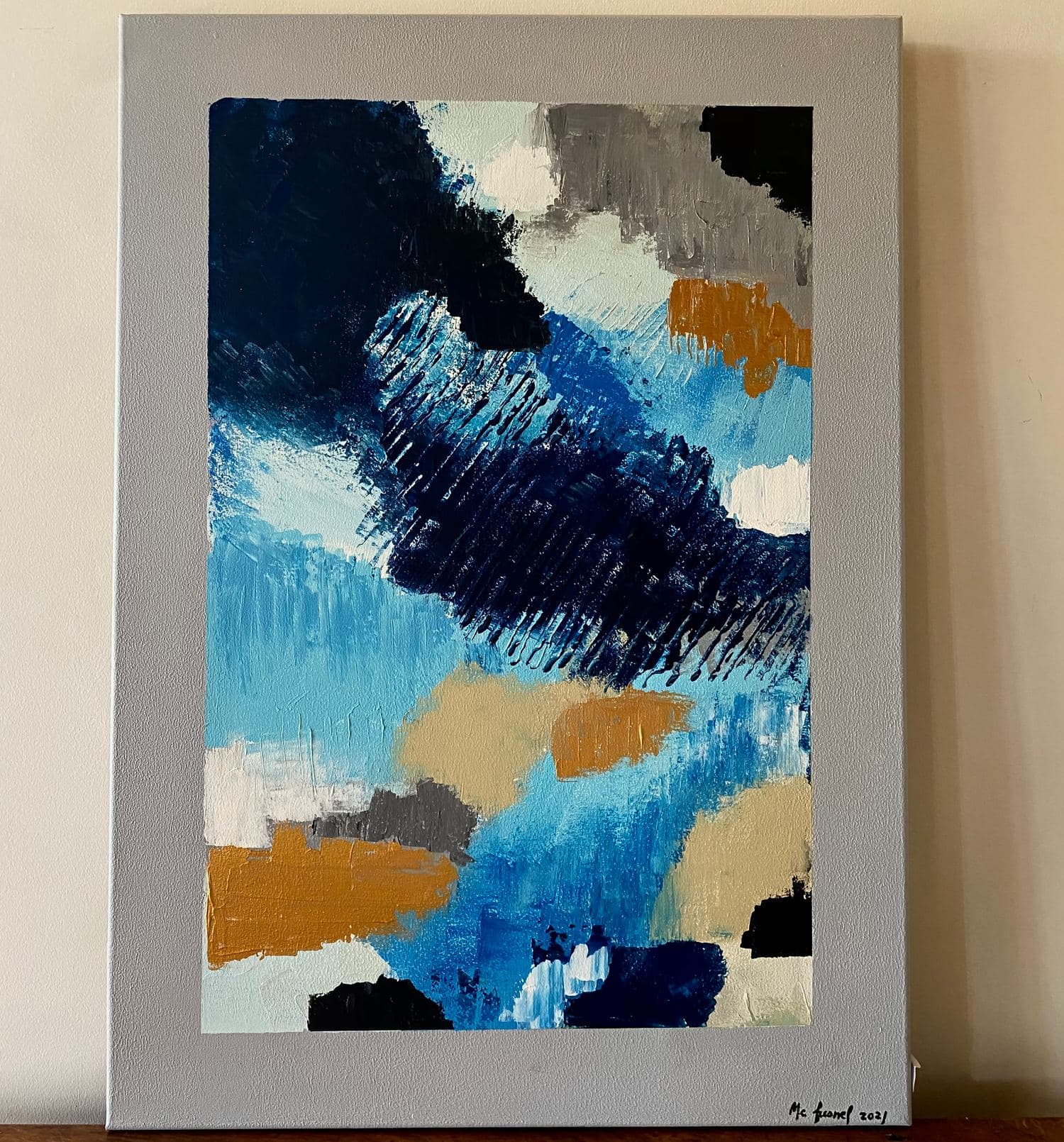
Acrylic or oil? For abstract painting, the choice of medium changes almost everything — drying speed, palette-knife texture, how a canvas ages on a wall. A working painter's honest comparison, from a studio that works in acrylic alone.
Stand in front of the paint aisle at any art-supply shop for long enough, and the same question comes up: acrylic or oil? For abstract painting especially, it isn't just a matter of habit — the choice of medium shapes how fast you can work, the texture a palette knife can build, how a canvas ages on a wall, and how many layers of colour you can stack in a single sitting. I've painted exclusively in acrylic since I picked the brushes back up in 2020, so here's a concrete comparison between the two — no artistic hierarchy, just the real differences between the two mediums, and why I chose mine.
Acrylic and oil: two chemistries, two ways of working
The core difference comes down to the binder. Acrylic suspends pigment in a water-based synthetic polymer emulsion: it dries by evaporation, in minutes for a thin layer and a few hours for a thick one. Oil paint binds pigment to a drying oil — usually linseed — which hardens through oxidation on contact with air, a slow process that can take days for a thin layer and weeks, sometimes months, for a heavy impasto. That single difference in drying cascades into nearly everything else: how much working time you have on the canvas, how you layer colour, which tools you reach for, how a studio smells, and even how fast an artist can produce work.
20th-century abstraction meets a much older medium
Oil paint has dominated Western painting since the 15th century: perfected by the Flemish primitives such as Jan van Eyck, it made possible the luminous glazes of the Old Masters, Rembrandt's dense impasto, and later the broken brushwork of the Impressionists. For five centuries it remained painting's reference medium, and its slow drying was, if anything, prized — it let painters blend colour and build modelling over time.
Acrylic, by contrast, is a 20th-century invention: developed as an industrial paint in the 1940s and marketed to artists from the late 1950s onward in the United States. Its fast drying immediately won over a generation of abstract painters working quickly and at large scale, who needed to stack colour without waiting weeks between steps — a pace that suits geometric abstraction, where clean colour fields and masking tape demand a fast, crisp dry, just as well as it suits more gestural abstraction. My own palette-knife work, rooted in my training between Buenos Aires and São Paulo, relies on that same logic of speed and material.
Five concrete differences on the canvas
- —Drying time — minutes to hours for acrylic, days to weeks for oil applied in a thick layer
- —Layering — acrylic stacks almost immediately; oil demands the 'fat over lean' rule and weeks of waiting between heavy layers
- —Texture and palette-knife work — both take relief well, but acrylic locks the material in place as soon as it dries, while a thick oil layer can keep shifting, or even crack, if the layers aren't built up methodically
- —Odour and solvents — acrylic thins and cleans up with water; oil calls for turpentine or white spirit, more pungent and requiring more care
- —Ageing — acrylic doesn't yellow with age the way some oil binders can, though it stays more sensitive than fully cured oil to prolonged contact with solvents
My choice: why I paint in acrylic
I chose acrylic as soon as I returned to painting, mostly for a practical reason: it lets me work fast, layer colour within a single session, and sculpt material with the palette knife without worrying it will shift over the following days. Canvases like Tempête, Équilibre, Synthèse d'Or and Nuit d'Été owe their pronounced relief to exactly that quick set, which locks in every knife stroke almost exactly as it was laid down.
Acrylic doesn't forgive slowness — but it rewards instinct.
I've shown these canvases at more than nine exhibitions across France, Spain and Andorra since 2021. You can find the full calendar of my past and upcoming exhibitions on the News page, and browse all of these acrylic works, including the palette-knife pieces, in the Full Collection.
Acrylic or oil: which medium fits your project?
Neither medium is superior in absolute terms — they simply serve different priorities. Anyone after subtle glazes, long blending times and a classical painting tradition will find oil unmatched, provided they accept its drying time. Anyone after a faster practice, bold palette-knife material and colour that won't yellow decades from now will find acrylic their natural medium — which is exactly why it has become the medium of choice for so much contemporary abstraction, geometric and gestural alike. For a collector, that choice also has a very practical consequence: an acrylic work bought directly from the studio can usually be hung without delay, without the transport precautions sometimes needed for oil that's still curing.
Tags
Frequently Asked Questions
What is the main difference between acrylic and oil paint?+
The difference comes down to the binder and the drying time: acrylic is a water-based polymer emulsion that dries by evaporation within hours, while oil binds pigment to a drying oil that hardens through oxidation over days or weeks. That difference in pace shapes everything, from how you layer colour to the texture you can achieve with a palette knife.
Why does acrylic suit geometric abstraction and palette-knife work so well?+
Because it locks material in place quickly: a crisp colour field or a knife-sculpted ridge holds its shape as soon as it dries, with no risk of sinking or bleeding into neighbouring layers over the following days — a real advantage for geometric abstraction, which relies on clean edges and controlled material.
Does acrylic paint yellow or crack over time the way oil can?+
No — unlike some oil binders, which can yellow slightly over the decades, an acrylic film stays stable over time. It is, however, more sensitive than fully cured oil to prolonged contact with solvents or harsh cleaning products — a soft, dry cloth is enough for routine care.
Can you mix acrylic and oil paint on the same canvas?+
You can paint in oil over a fully dried acrylic layer, but never the other way round: acrylic applied over oil won't adhere properly and will eventually crack or flake off. As a rule, I prefer to stay with a single medium from start to finish on any given canvas.
Discover the works
Browse the full collection of original abstract paintings by M. C. Lamamie de Clairac.
View the Collection →