The Journal
Canvas, Wood or Paper: Choosing a Support for Abstract Acrylic Painting
Colour, composition and knife technique get all the attention — the support almost never does. Linen canvas, cotton canvas, primed wood panel or heavy paper: each surface takes acrylic differently. Here's what sets them apart, and why canvas has always been my choice.
Colour, composition, knife or brush — people talk about all of it, almost never about the support. Yet before the first stroke of paint, there's a quiet decision that shapes everything that follows: what will the painting actually be made on? Linen canvas, cotton canvas, primed wood panel, heavy paper — each support takes acrylic differently, absorbs or holds the paint in its own way, and ages better or worse over time. After more than twenty-five canvases painted since I returned to painting in 2020, here's what practice has taught me about a subject that's almost never discussed — and why my own choice has always come down to a single support.
The support: the question that gets skipped before colour
A support, in painting, is simply the surface the paint layer bonds to: canvas stretched over a wooden frame, a rigid panel, heavy paper. It sounds like a technical detail, almost secondary next to something more visible like palette or composition. It isn't. How flexible or rigid a support is, how much of the water in acrylic paint it absorbs, how well it holds up under the weight of knife-applied paint — all of this shapes both the painter's gesture and how the finished work ages. A geometric composition with clean edges, for instance, needs a support stable enough to keep a line crisp — paper that's too soft, or a canvas that isn't properly stretched, will let it warp slightly.
Linen or cotton canvas: two fibres, two behaviours
Canvas remains, by far, the most common support in contemporary abstract painting — but not all canvases behave the same way. Two fibres dominate the market, with quite different responses to acrylic:
- —Cotton canvas: a shorter, more elastic fibre, more affordable, slightly more absorbent — a solid compromise for most formats and budgets
- —Linen canvas: a longer, mechanically stronger fibre that loosens less with time and humidity, at a noticeably higher price
- —Weight (grams per square metre): a heavier canvas takes the weight of knife-applied paint better, without sagging or loosening on the frame
- —Weave, tighter or looser, which stays visible under a thin paint layer — a detail that matters in geometric abstraction, where clean edges and flat colour fields do a lot of the work
Painting acrylic on wood: a different logic
A wood panel — primed plywood or MDF, most often — follows a different logic than canvas. Its total rigidity removes any risk of warping: even the thickest paint, applied with a knife right to the edge, will never make the surface ripple. That's a real advantage for heavily textured work. In exchange, wood is heavier, more sensitive to long-term humidity changes — it can bow slightly if the primer wasn't applied to both faces — and it loses the canvas's slight, living give under the hand, which many palette-knife painters actually rely on while working.
What about paper?
Paper has an undeserved bad reputation for acrylic. Heavy paper — 300 gsm and up, primed or made specifically for water-based media — takes a thin-to-medium acrylic layer very well, and remains a valuable support for preparatory studies, palette tests or quick small-format pieces. Its real limit is mechanical: it can't take heavily loaded knife work without buckling, and a finished piece on paper almost always needs framing under glass to protect it — unlike canvas, which is usually shown bare, without glass, to let the paint surface breathe.
Priming: the invisible step that changes everything
Raw canvas or bare wood should never take acrylic directly: the fibres are too absorbent, drinking in the binder and weakening the paint over time, on top of shifting its tone and creating uneven adhesion. That's the role of priming — usually a white acrylic gesso, applied in two or three coats, lightly sanded between each. It builds a slightly toothy surface — enough grip to hold the paint, smooth enough to let a knife glide without catching. Pre-primed canvases sold ready to paint work fine for most uses; even so, I always add one more thin coat myself, for a more consistent surface from one canvas to the next.
A well-primed canvas never shows in the finished painting — which is exactly the proof that it did its job.
Why I paint exclusively on canvas
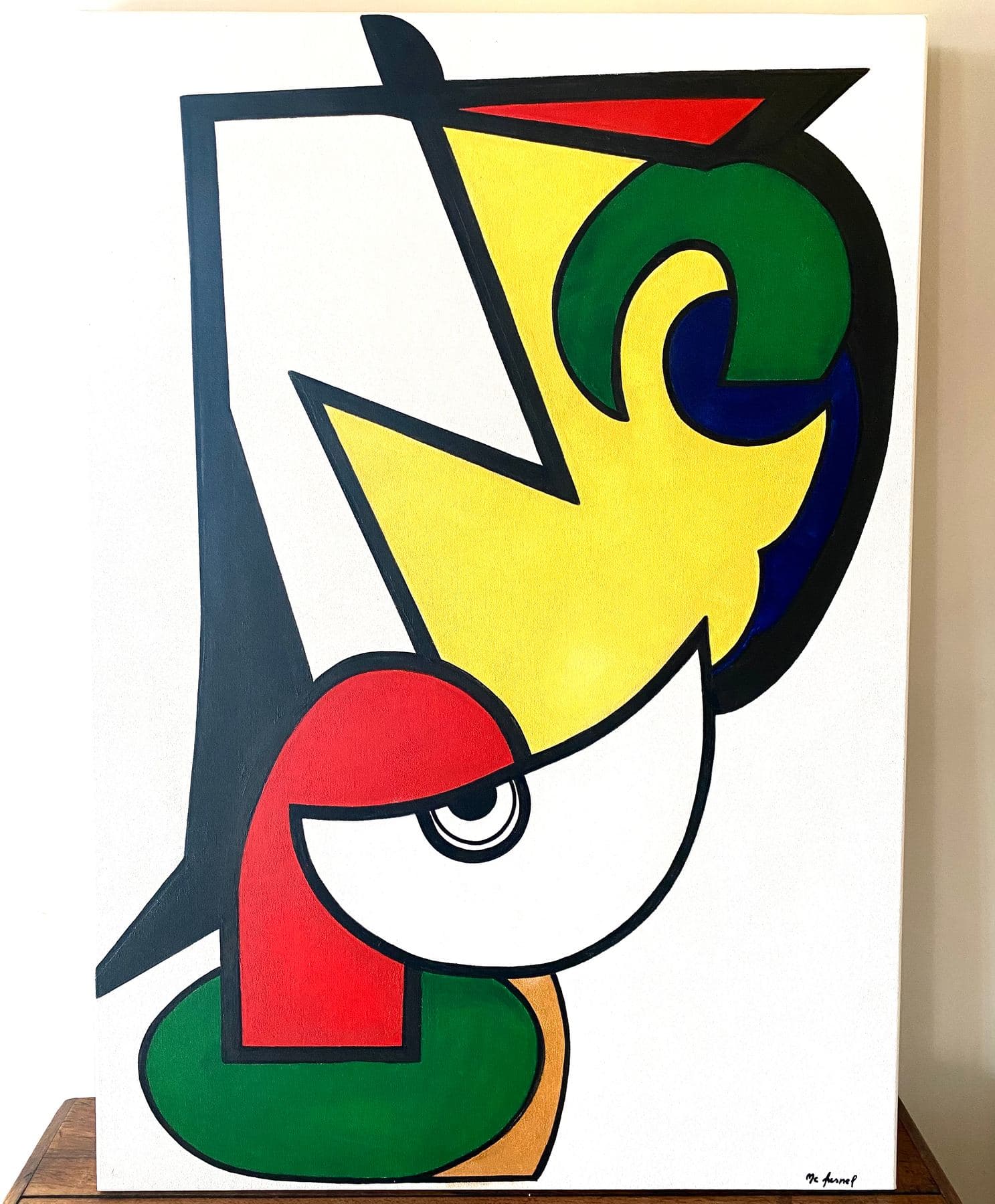
Every piece in my collection is acrylic on canvas — never wood, never paper for anything meant for exhibition. Some, like Blanc Immaculé, Équilibre or Synthèse d'Or, carry heavy relief built up with a knife over several passes; a rarer few combine acrylic with another medium on the same primed surface — Upside Down layers acrylic and ink, a direct test of how a well-primed canvas holds two very different media without either one overpowering the other. Canvas's slight tension under the knife, its ability to travel rolled or stretched between the nine exhibitions I've held across France, Spain and Andorra since 2021, and how much more easily it can be re-stretched or repaired than a panel — these very practical reasons, as much as the weave visible under a thin paint layer, are why canvas has been my only support since I returned to painting. You can see the full body of work in the Collection, and check the dates and venues of upcoming exhibitions on the News page.
Tags
Frequently Asked Questions
Can you paint acrylic on any canvas?+
Not quite — a raw, unprimed canvas absorbs too much of the acrylic binder and weakens the paint over time. A canvas already prepared with gesso, in one or more coats, is what a piece meant to last actually needs.
What is the difference between linen and cotton canvas for acrylic?+
Linen, with its longer fibre, is stronger and loosens less over time, but costs more. Cotton, more flexible and affordable, remains an excellent compromise for most formats and uses.
Can you paint acrylic on wood or paper?+
Yes — primed wood offers ideal rigidity for heavily textured work, and heavy paper (300 gsm minimum) suits studies and small formats well. Each support has its own limits against heavily loaded knife work.
Do you need to prime a canvas that's already sold pre-primed?+
Not necessarily — most commercial canvases already come primed and ready to paint. An extra coat of gesso still helps even out the surface from one canvas to another, especially before knife work.
What support does M. C. Lamamie de Clairac paint on?+
Exclusively stretched canvas, primed with gesso — never wood or paper for a piece meant for exhibition or sale.
Discover the works
Browse the full collection of original abstract paintings by M. C. Lamamie de Clairac.
View the Collection →