The Journal
Abstract Painting for Beginners: The Essential Supplies to Get Started
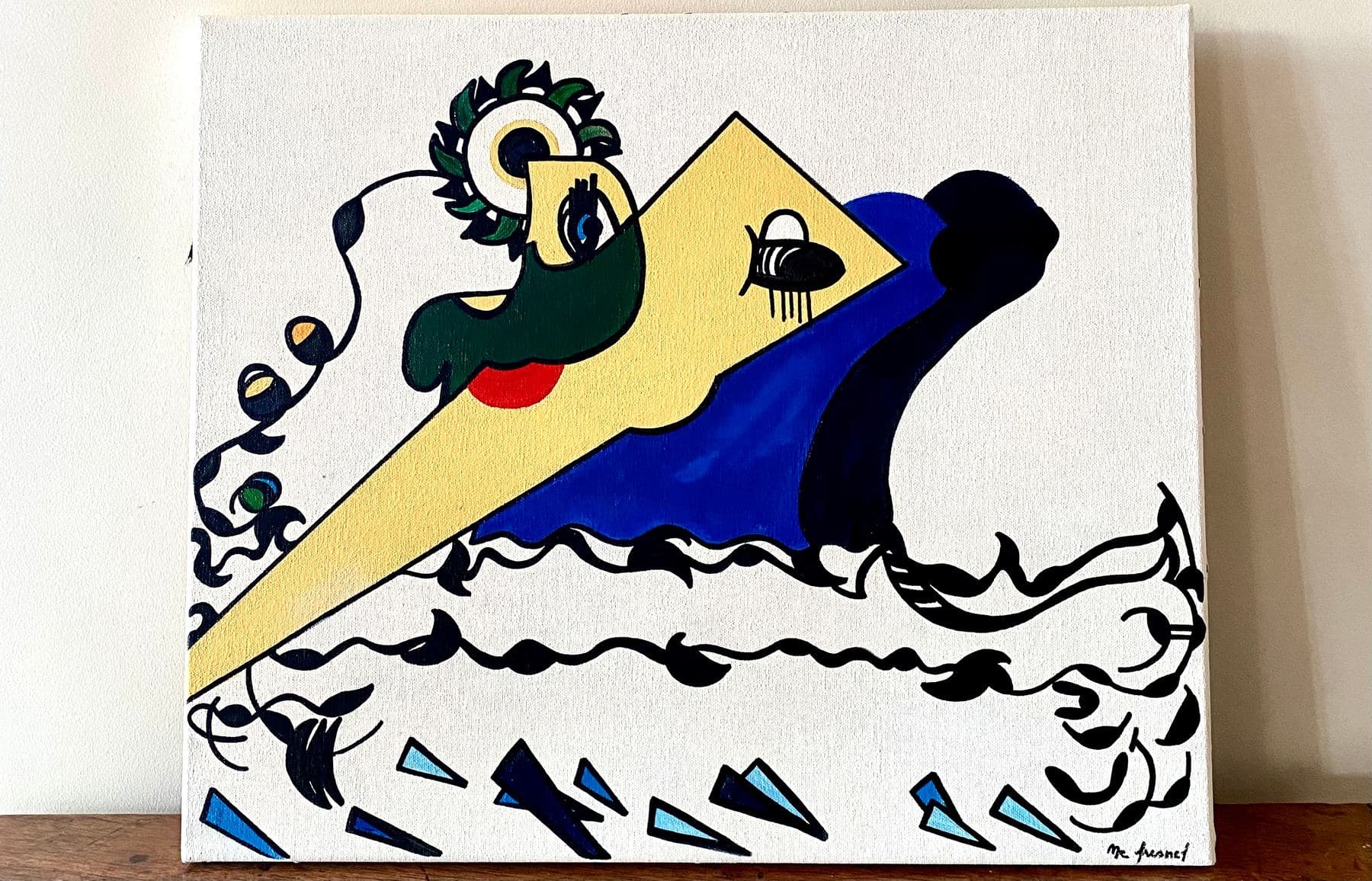
"I don't dare start, I don't have the supplies." I hear this often at my exhibitions. After returning to painting in 2020 with the basics rather than a full studio, here is what you actually need to start painting abstract art.
"I don't dare start, I don't have the supplies." It's a sentence I hear often at exhibitions, from visitors who would love to paint but never quite get started — convinced they first need a full studio, dozens of paint tubes and a technique already mastered. After returning to painting in 2020, following a ten-year pause, I can put one worry to rest: the supplies that actually matter for starting abstract painting fit on a small table, not in a whole studio. Here, without the sales pitch, is what you really need to get going.
What do you actually need to start abstract painting?
Abstract painting has an advantage that's often overlooked: it needs no model, no reference photo, and no prior mastery of drawing. It doesn't require a dedicated studio with a professional easel and gallery lighting either — a protected table, decent daylight and a little room to step back and look are more than enough to start. The truly essential supplies come down to very few things: paint, a surface to hold it, and one or two tools to spread it. Everything else — an easel, varnish, a wide range of colours, specialised tools — comes with time, canvas after canvas, never before.
The essential supplies, item by item
- —Acrylic paint: a few basic colours (a red, a blue, a yellow, plus white and black) are plenty to start with — no need for a set of twenty-four tubes; the first skill is learning to mix
- —A support: a canvas already stretched on a frame, thick acrylic paper, or a simple wood panel — what matters is a surface that won't warp under the paint
- —One or two flat brushes in different sizes, plus an inexpensive palette knife from a starter set, to get a feel for the material before investing in a quality tool
- —A palette for mixing: a plain plate, a sheet of glass, or even baking paper works perfectly well at the start
- —A water container and a few rags or paper towels, to clean brushes between colours
- —A drop cloth or old newspapers to protect the work surface — more useful at this stage than a dedicated apron
Canvas, paper or panel: which support should you start with?
Thick acrylic paper is the cheapest support for practising without pressure — you can ruin several sheets without a second thought, which makes it much easier to risk bolder compositions. A canvas stretched on a frame, on the other hand, gives an immediately more "finished" result, ready to hang — it's the support I use for every exhibited work, whether painted with a brush or a palette knife. A wood panel, being more rigid, suits palette-knife work particularly well, as I explain in my article on that technique: its surface doesn't flex under the tool's pressure the way a poorly stretched canvas can. For a first attempt, I usually suggest starting on paper, then moving to canvas once the hand feels more confident.
Composing without knowing how to draw: the freedom of abstraction
This is probably what holds back the most beginners: the fear of "not knowing how to draw." In abstract painting, that skill simply isn't the starting point. The goal isn't to faithfully represent a subject, but to build a composition out of shapes, colour and texture — a relationship to the canvas much closer to gesture and instinct than to academic drawing. Some of my own paintings, like Ambiguïté or Passage Flou, were born directly in paint, with no pencil sketch beforehand: the composition built up layer by layer, reacting to what appeared on the canvas rather than following a plan fixed in advance.
An abstract canvas doesn't judge your pencil line — it begins exactly where academic drawing stops, with colour, gesture and material.
My own return to painting in 2020, with the essentials
When I picked the brush back up in 2020, after a ten-year pause, I didn't return with a complete professional studio: a handful of colours, one canvas and the will to start again were enough for the first pieces. The palette-knife technique and the layered build-up I use today on canvases like Équilibre or Tempête settled in gradually, over months, never on day one. That modest progression is what led to my first public exhibition in Puylaurens in 2021, and later to the exhibitions and art fairs across France, Spain and Andorra listed on the News page. If you want to see where such simple supplies can lead with practice, the Full Collection now brings together more than forty canvases, from the earliest compositions to the most recent pieces.
What budget to plan for, and where to find supplies without wasting money
- —Start with entry-level or mid-range supplies — professional quality mostly pays off once the practice is established, not for first attempts
- —Buy few colours but learn to mix them, rather than stocking up on tubes from day one
- —Choose an inexpensive palette-knife starter set with three or four sizes to explore texture, before investing in a quality tool if the technique appeals to you
- —Reuse everyday containers as a palette or water cup rather than buying dedicated equipment
- —Don't cut corners on the support itself — a canvas or panel that warps or sags ruins the work, even with the best paint
Tags
Frequently Asked Questions
What is the minimum equipment needed to start abstract painting?+
A few basic acrylic colours (red, blue, yellow, white and black), a support — canvas, thick paper or panel — and one or two flat brushes. An inexpensive palette knife can be added to explore texture, but nothing beyond that is truly essential to get started.
Do you need to know how to draw to paint abstract art?+
No. Abstract painting doesn't rely on faithfully representing a subject — it's built from colour, gesture and material. Several of my own paintings were born directly in paint, with no pencil sketch beforehand.
Acrylic or oil paint for a beginner?+
Acrylic is generally easier to start with: it dries fast, cleans up with water, and forgives mistakes more readily than oil, which needs solvents and much longer drying times. It's also the medium I use exclusively, as I explain in my article comparing the two techniques.
What canvas size should you choose for a first abstract painting?+
A medium size, roughly 40×50 cm to 50×70 cm, is usually the most comfortable to start with — large enough to allow free gesture, small enough not to feel intimidating or require too much paint.
What budget should you plan for to start abstract painting?+
With entry-level supplies — a few tubes of paint, one support and two brushes — it's possible to start on a modest budget, well below that of a full professional setup. The priority is a solid support rather than a long list of accessories.
Discover the works
Browse the full collection of original abstract paintings by M. C. Lamamie de Clairac.
View the Collection →