The Journal
Can You Mix Ink and Acrylic in Abstract Painting? Technique and Precautions
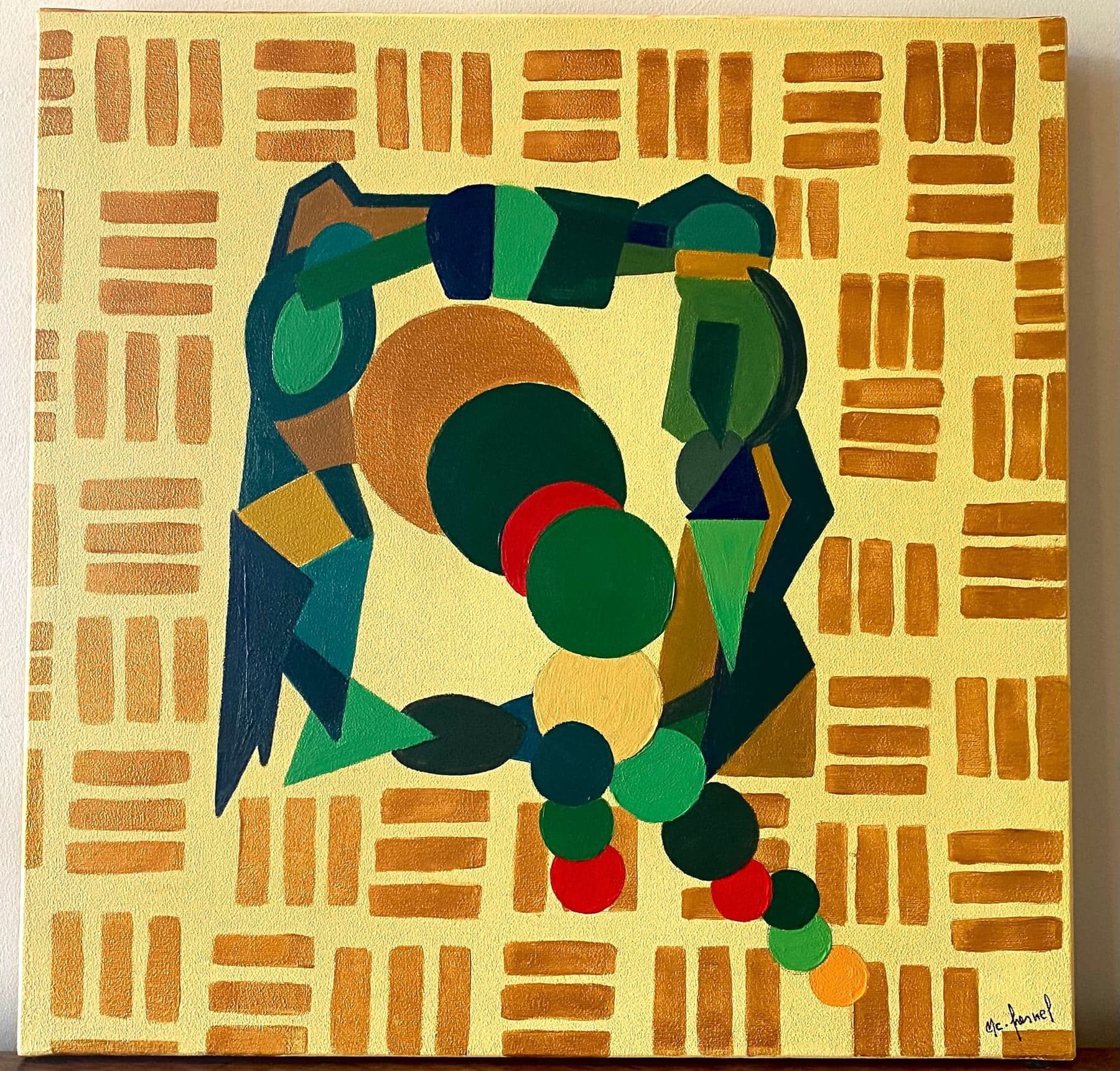
"Is that paint or drawing?" A question that comes up in front of Upside Down or Viracocha, the only two canvases where I combine acrylic with ink or marker. Here's how line and colour meet in my work — and what's worth knowing before you try it.
"Is that paint or is that drawing?" It's a question I sometimes get in front of Upside Down or Viracocha, two canvases where a finer, drier line cuts through the acrylic — ink in one, marker in the other. They're the only two pieces in my Collection, so far, that combine acrylic with another medium. Many visitors assume this kind of mixing is reserved for illustrators or trained draughtspeople. It isn't: here's how I approach ink and marker over an acrylic base, and what's worth knowing before trying it yourself.
Why combine ink or marker with acrylic in abstract painting?
Acrylic, whether applied with a brush or a palette knife, builds mass: fields of colour, textured relief, areas that spread and blend. Ink or marker do the opposite — they trace, isolate, sharpen. Adding a fine line over a layer of colour creates tension between the broad gesture that built the ground and the tighter gesture that comes to organise it, almost like a drawing imposed afterward on a composition already in place. It's a way to add rhythm or direction to a canvas without reworking the colour itself — useful when a passage of colour already feels right but lacks something for the eye to hold onto.
Ink, marker, felt-tip: how they differ from acrylic
- —Acrylic is a pigment-and-binder paint that dries into a flexible, opaque film, with real thickness if you want it
- —Ink, whether water-based or shellac-based, is far more fluid and transparent: it marks without building volume, right at the surface
- —Marker, often alcohol-based, dries fast but can bleed or thin out slightly on a surface that's still porous
- —Acrylic paint markers or pens, pigment-based, come closest to the paint itself: opaque, covering, and generally more stable over time
- —None of them behave the same way depending on whether the acrylic layer beneath is matte, satin or glossy
How to add an ink line without damaging the acrylic layer underneath
The main risk isn't chemical compatibility — ink or marker adhere to well-dried acrylic without trouble — it's timing. An acrylic layer can feel dry to the touch within hours, but it often takes several days to cure fully all the way through; drawing too soon risks slightly shifting the pigment underneath. I prefer to wait at least 24 to 48 hours depending on how thick the layer is, and I always test on a scrap of canvas or a hidden corner before marking the actual piece. Texture matters too: a matte surface holds ink better than a satin or glossy one, where an alcohol marker can bead instead of laying down a clean line.
An ink line never corrects the colour — it gives the work a direction the brush or the knife hadn't found yet.
Upside Down and Viracocha: the two canvases where I mixed acrylic with another medium
In Upside Down, the coloured acrylic base went down first, in broad masses; the ink came later, at the very end, tracing the lines that organise the composition and give the painting its title. Viracocha follows a similar logic, with a marker sharpening more graphic motifs over an acrylic ground built earlier — a title that, as I explain in my article on the meaning behind my titles, draws on my South American roots. In both cases, ink or marker never replace the paint: they arrive last, like a graphic signature over work that's already resolved. Both canvases, like the rest of my acrylic and palette-knife work, are visible in the Full Collection, and I show them regularly at my exhibitions across France, Spain and Andorra, listed on the News page.
Worth trying? Materials and precautions before you start
- —Start with a fine pigment ink pen (India-ink style) or an acrylic paint marker, both more stable over time than a cheap alcohol-based marker
- —Always test on a scrap of canvas or a hidden corner before marking the finished piece
- —Wait until the acrylic layer is fully cured through, not just dry to the touch, before working over it
- —Work on a matte surface rather than a glossy one for a cleaner, more reliable line
- —Plan for a suitable varnish once the line work is in place, as I explain in my article on varnishing an acrylic painting, to protect the piece without smearing it
Tags
Frequently Asked Questions
Can you actually mix ink and acrylic paint on the same canvas?+
Yes, without any particular issue once the acrylic layer is fully cured through — allow at least 24 to 48 hours depending on thickness. The result mostly depends on the type of ink and the surface texture, so it's always worth testing on a scrap piece before working on the finished piece.
Does marker hold up well on a canvas already painted in acrylic?+
It depends on the finish. On a matte surface, a marker or pigment fineliner usually adheres well. On a satin or glossy surface, an alcohol-based marker can bead instead of laying down a clean line — an acrylic paint marker or pen, pigment-based, tends to give a more reliable result.
Should you varnish a canvas that combines acrylic and ink?+
It's recommended to protect the piece, but carefully: some inks aren't fully lightfast and can react badly with the wrong varnish. My article on varnishing an acrylic painting explains how to choose a suitable varnish and apply it without smearing a fine line.
What ink or marker should you use to draw on an abstract acrylic painting?+
A fine pigment fineliner or a quality acrylic paint marker, both more stable over time than a cheap school marker or ink. These are the tools that come closest, in adhesion and permanence, to the acrylic paint itself.
Do you need to know how to draw to add ink line work to an abstract canvas?+
No — just like abstract painting itself, it isn't about representing a subject but about adding rhythm or direction. A single simple line, repeated or standalone, is more than enough to start with; the important part is testing on a scrap of canvas first.
Discover the works
Browse the full collection of original abstract paintings by M. C. Lamamie de Clairac.
View the Collection →