The Journal
Pierre Soulages and Outrenoir: When Black Becomes Light
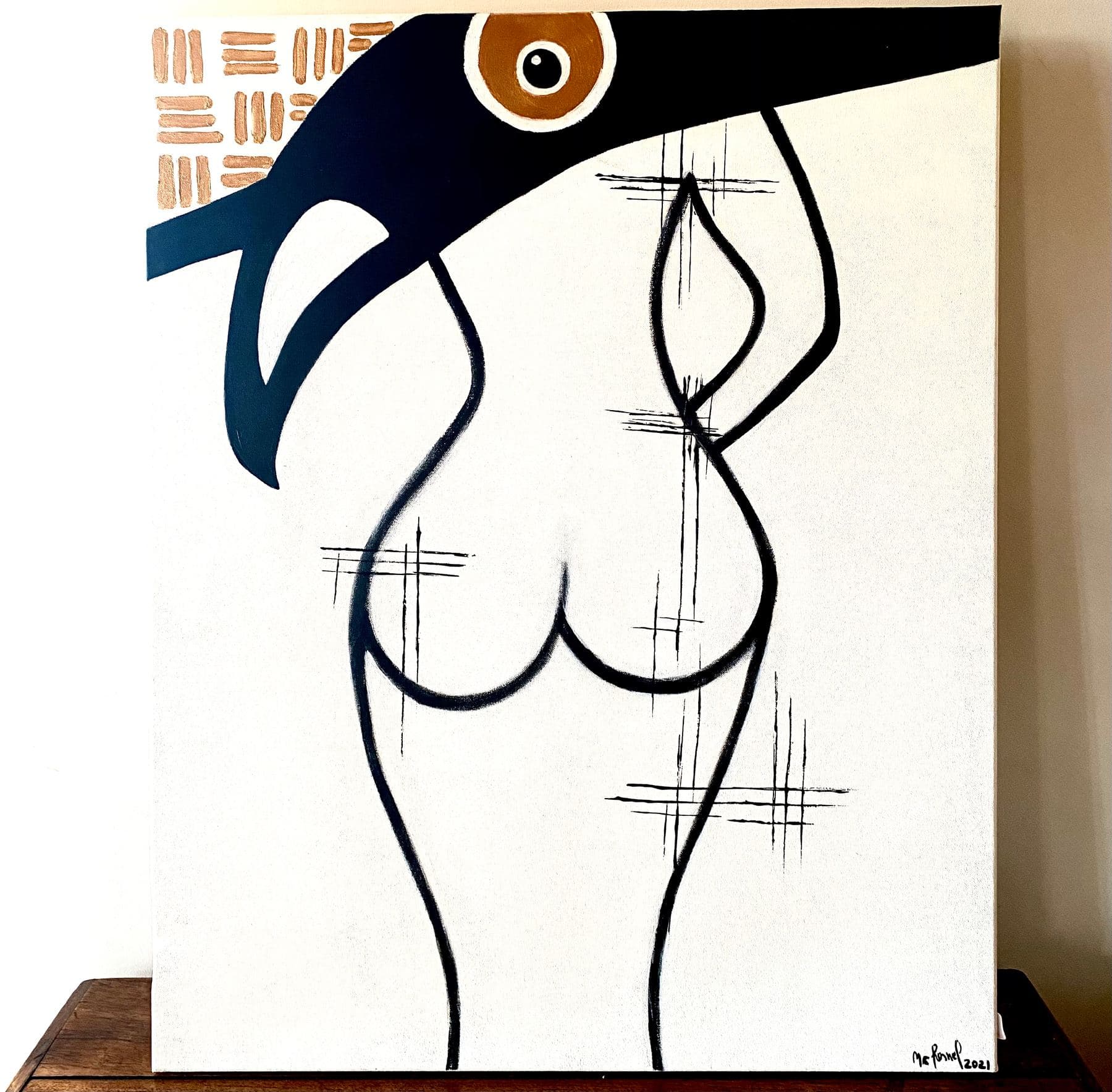
One night in 1979, in his studio in Sète, Pierre Soulages fell asleep in front of canvases he thought had failed — entirely black, with nowhere left to go. When he woke, morning light slid across the textured paint and drew out reflections he hadn't expected: Outrenoir had just been born. A look at a pictorial language born a short drive from the region where I've been exhibiting since 2021.
One night in 1979, in his studio in Sète, Pierre Soulages was working on a series of canvases covered entirely in black. Unsatisfied, he eventually fell asleep in front of what he believed was a dead end. When he woke, morning light slid across the still-fresh paint and drew out, on the black surface, reflections, hollows and lines of brightness no coloured pigment could ever have produced. That morning, Outrenoir was born — a word Soulages coined himself to describe what black, worked as matter rather than colour, can do with light. The painter was born in Rodez, a few hours' drive from my own studio in the Tarn, in the same broad Occitanie region where I've been exhibiting since 2021 — reason enough, finally, to give him a whole article.
What Is Outrenoir?
Outrenoir — literally, 'beyond black' — names a method more than a style: painting exclusively in black, not as one dark colour among others, but as raw matter shaped to capture, reflect and scatter light. Soulages doesn't paint black paintings in the usual sense; he paints with the light that black gives back once it's been worked into ridges, grooves, matte patches and polished ones. Seen head-on, an Outrenoir canvas can look uniformly dark; take a step, change the angle of your gaze or the time of day, and the same surface starts to shift through silvery greys, bluish glints, patches that read almost white. In his hands, black is never fixed — it's a material that changes with the viewer, not with the pigment.
1979: The Night Black Became Light
By the time Outrenoir arrived, Soulages already had thirty years of a career built around black and light behind him — from the late 1940s he painted with walnut stain, a brown-black dye normally used for staining wood, applying it to large sheets of paper in broad bands laid down with a knife or a wide brush. But it's that night in 1979 that tips his work into new territory: after hours covering several canvases in black without getting the result he wanted, he falls asleep, exhausted, convinced he's painted himself into a corner. When he wakes a few hours later, the light has changed, and with it his perception of the surface: the ridges he'd carved into the thick paint with a knife and a scraper are now throwing back unexpected shades of light. Soulages realises the canvases aren't failures at all — they open onto entirely new territory that no painter before him had explored so systematically. He's sixty years old at the time; he would spend more than forty more pursuing this single path, until his death at a hundred and two, in 2022.
The Vocabulary of Outrenoir
A handful of principles recur, canvas after canvas, across Soulages' Outrenoir work:
- —Black as the sole pigment, with no added colour or tint — every variation comes from the surface, never from the palette
- —Tools that move away from the classic brush: knives, scrapers, wide stiff brushes, used to carve, groove and sculpt the still-wet paint
- —Light that becomes, quite literally, the work's second material, on equal footing with the paint itself — without it, the canvas stays invisible
- —Often monumental formats, built for a viewer who moves physically in front of the work and discovers its variations while walking
- —A total abstraction with no descriptive titles: Soulages numbered and dated his canvases rather than naming them, to avoid suggesting any one reading
Soulages' black isn't an absence — it's a working material, almost a raw one, the way the built-up paste I layer with a palette knife is for me: in both cases, it's the light that finishes the painting, not the painter alone.
The Musée Soulages in Rodez, in the Heart of Occitanie
Opened in 2014 in his home town, the Musée Soulages in Rodez holds the largest public collection of the artist's work anywhere — a personal donation of several hundred pieces, from the early walnut-stain works of the 1940s to the last Outrenoir canvases painted after he turned a hundred. The building itself, designed by the Catalan firm RCR Arquitectes, plays on the same contrast that runs through Soulages' own work — dark corten-steel volumes cut through by natural light — a direct architectural echo of the art it houses. An hour's drive from Rodez, the abbey church of Sainte-Foy in Conques holds another, lesser-known Soulages masterpiece: more than a hundred stained-glass windows he designed between 1987 and 1994, developing an entirely new translucent glass with a master glassmaker to let an almost-white light into the building's Romanesque gloom. Rodez and Conques both sit in the same Occitanie region where I've exhibited several times since 2021 — in Lavaur, Puylaurens, Saint-Félix-Lauragais and Toulouse — a region that, it turns out, has little to envy the major capitals when it comes to abstract art.
Outrenoir, Malevich's Black Square, Rothko's Colour Field: Three Blacks, Three Intentions
Black fascinated several major figures of twentieth-century abstraction, but each put it to a radically different use. Kazimir Malevich's Black Square on White Ground, painted in 1915 and whose story I trace in an earlier article, reduces black to a flat, pure geometric shape, set down like a manifesto — an endpoint rather than a starting point. Mark Rothko, in his final paintings, stacked vast, nearly flat fields of black and grey in search of a quiet, contemplative emotion, closer to reverence. Soulages sought neither symbol nor silence: he built up a textured surface so that shifting ambient light would itself become the painting's subject. Three blacks, three generations, three abstractions that share nothing but the colour they refuse to use.
What I Take From Outrenoir Into My Own Knife Work
I don't paint in black — my work stays built around colour, often vivid, inherited from my training between Buenos Aires and São Paulo. But Outrenoir taught me something I rediscover every time I work with a palette knife, a technique I go into in an earlier article: a canvas is never quite finished until you've seen it under more than one light. The relief I build up in successive layers, the way a canvas like Équilibre or Nuit d'été shifts in intensity depending on the time of day or the angle of a lamp — that's a lesson I owe, indirectly, to a painter born an hour from my studio. You can see my knife-worked canvases in the Full Collection, and if you're ever passing through Occitanie, my upcoming exhibitions are listed on the News page — maybe a good excuse to detour through Rodez either way.
Tags
Frequently Asked Questions
What is Pierre Soulages' Outrenoir?+
Outrenoir is a painting method developed by Pierre Soulages in 1979, based on painting exclusively in black while working the surface — grooved, carved, smoothed with a knife or scraper — so that it catches and reflects ambient light. The word literally means 'beyond black': no longer a dark colour, but a material that produces light of its own depending on angle and lighting.
Why did Pierre Soulages paint only in black?+
The choice didn't come all at once: Soulages first painted with walnut stain from the 1940s, before developing Outrenoir after a night in 1979 when he woke to find that black canvases he'd thought had failed were actually reflecting unexpected light depending on their surface relief. He then spent more than forty years exploring this single path, until his death in 2022.
Where can you see Pierre Soulages' work today?+
The Musée Soulages in Rodez, opened in 2014, holds the largest public collection of his work. An hour away, the abbey church of Sainte-Foy in Conques houses his stained-glass windows, designed between 1987 and 1994. The Centre Pompidou in Paris and several major international museums also hold important canvases by the artist.
What's the difference between Soulages' Outrenoir and Malevich's Black Square?+
Malevich used black as a flat geometric shape, set down like a theoretical manifesto for pure abstraction. Soulages, by contrast, built up a textured surface whose appearance literally changes with ambient light — black becomes an optical tool as much as a painted one, not a fixed symbol.
Does M. C. Lamamie de Clairac draw on Pierre Soulages?+
Not directly in colour — my work stays built around vivid tones rather than black. But Soulages' attention to how light reveals a canvas's surface relief speaks to something I share in my own knife-worked pieces, where the paint's texture changes appearance depending on the light.
Discover the works
Browse the full collection of original abstract paintings by M. C. Lamamie de Clairac.
View the Collection →